

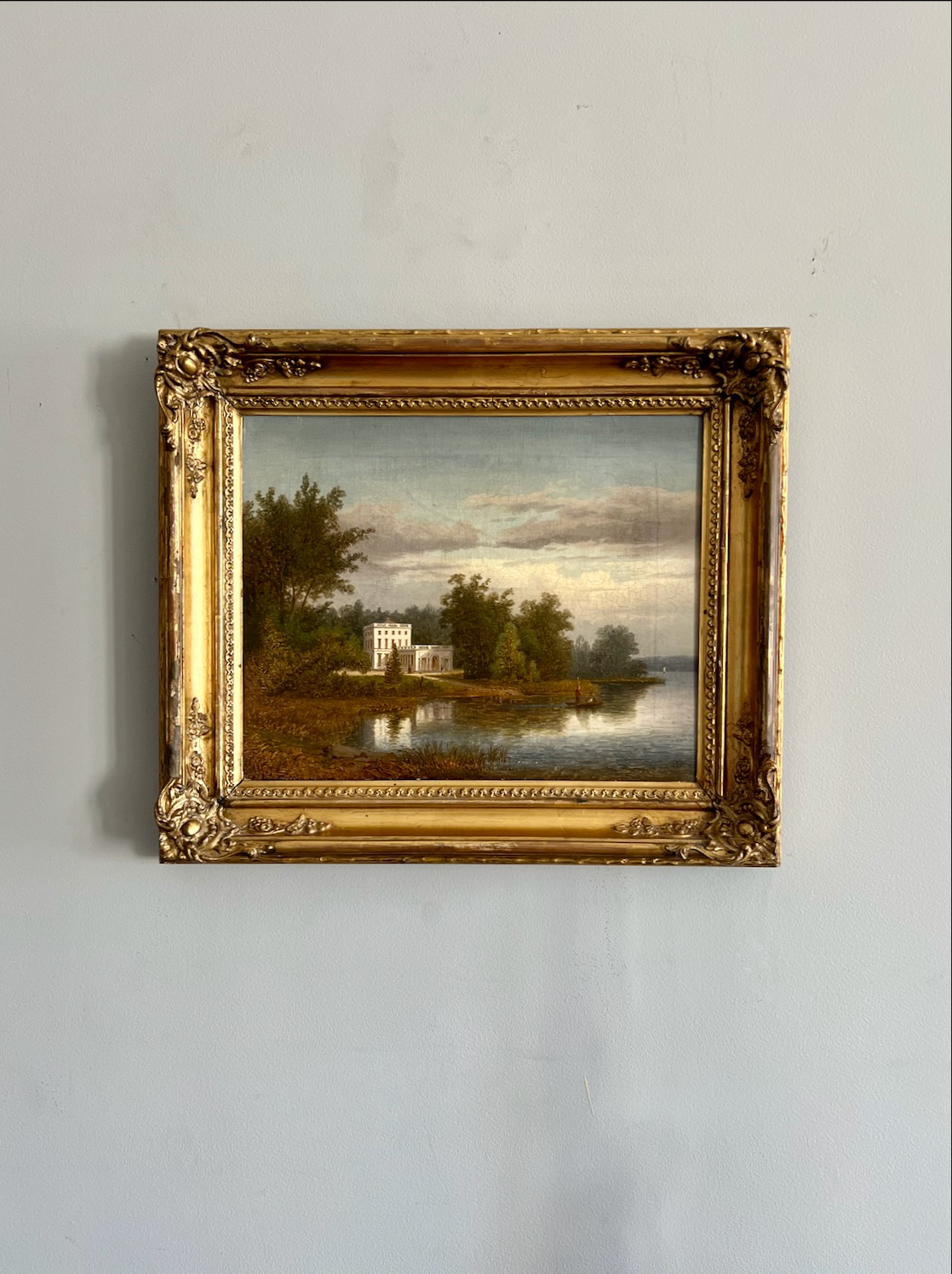
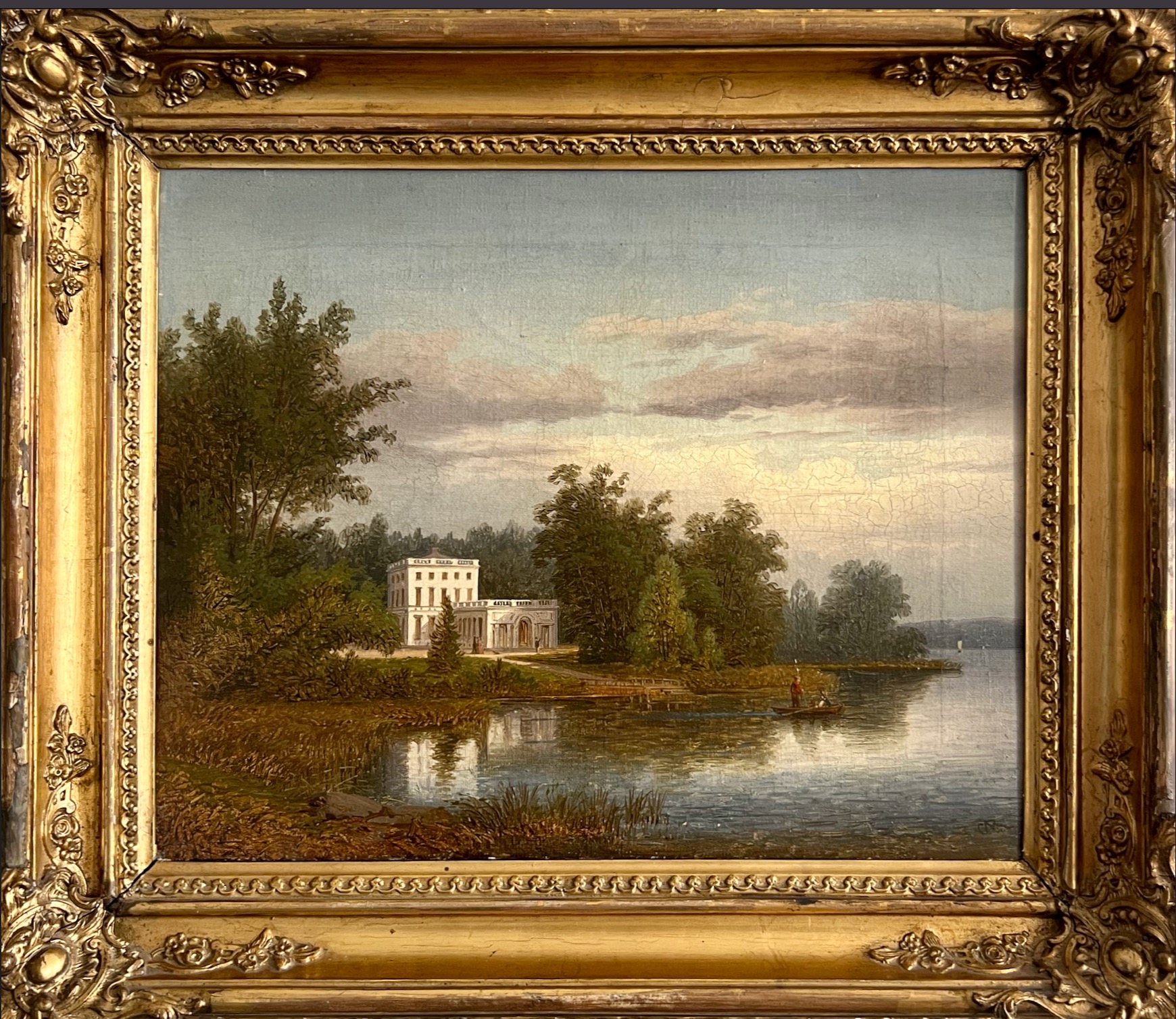
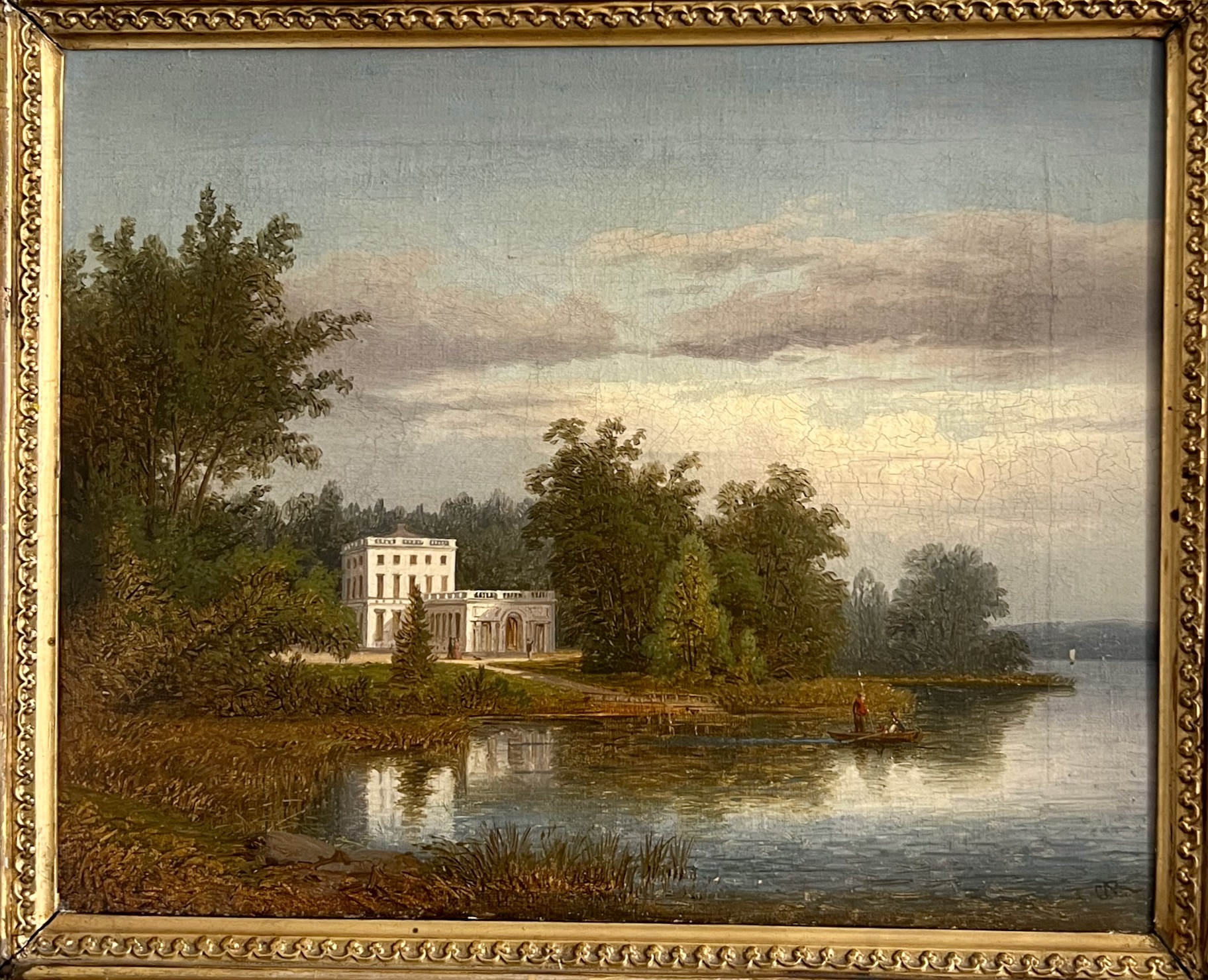
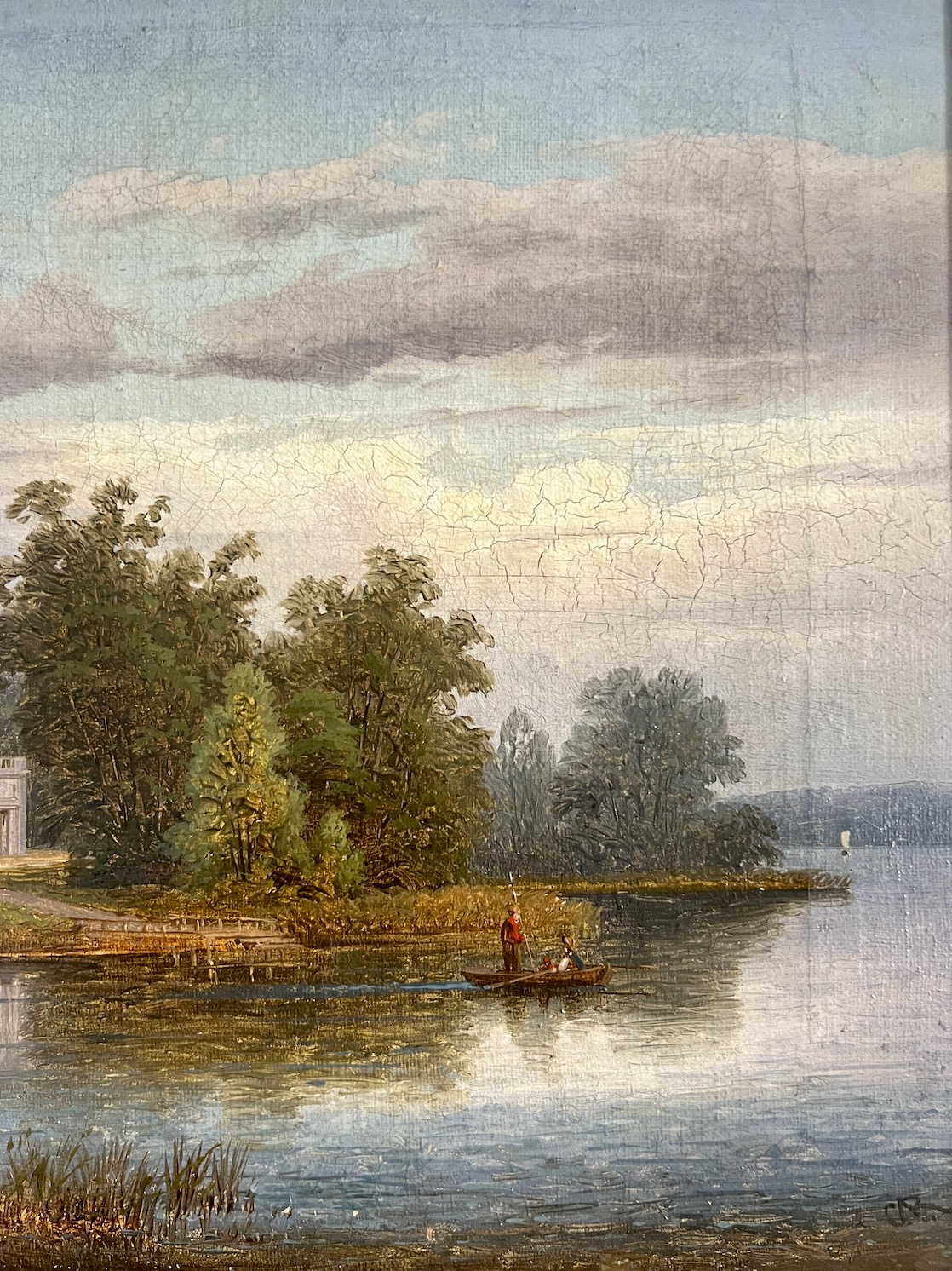
Carl Abraham Rothstén, View of King Gustav III´s Haga Pavilion
Price:38000 SEK3382 EUR3648 USDChange Currency
Dimensions: Height 46 cm (19 inches) x Width 53 cm (21 inches)
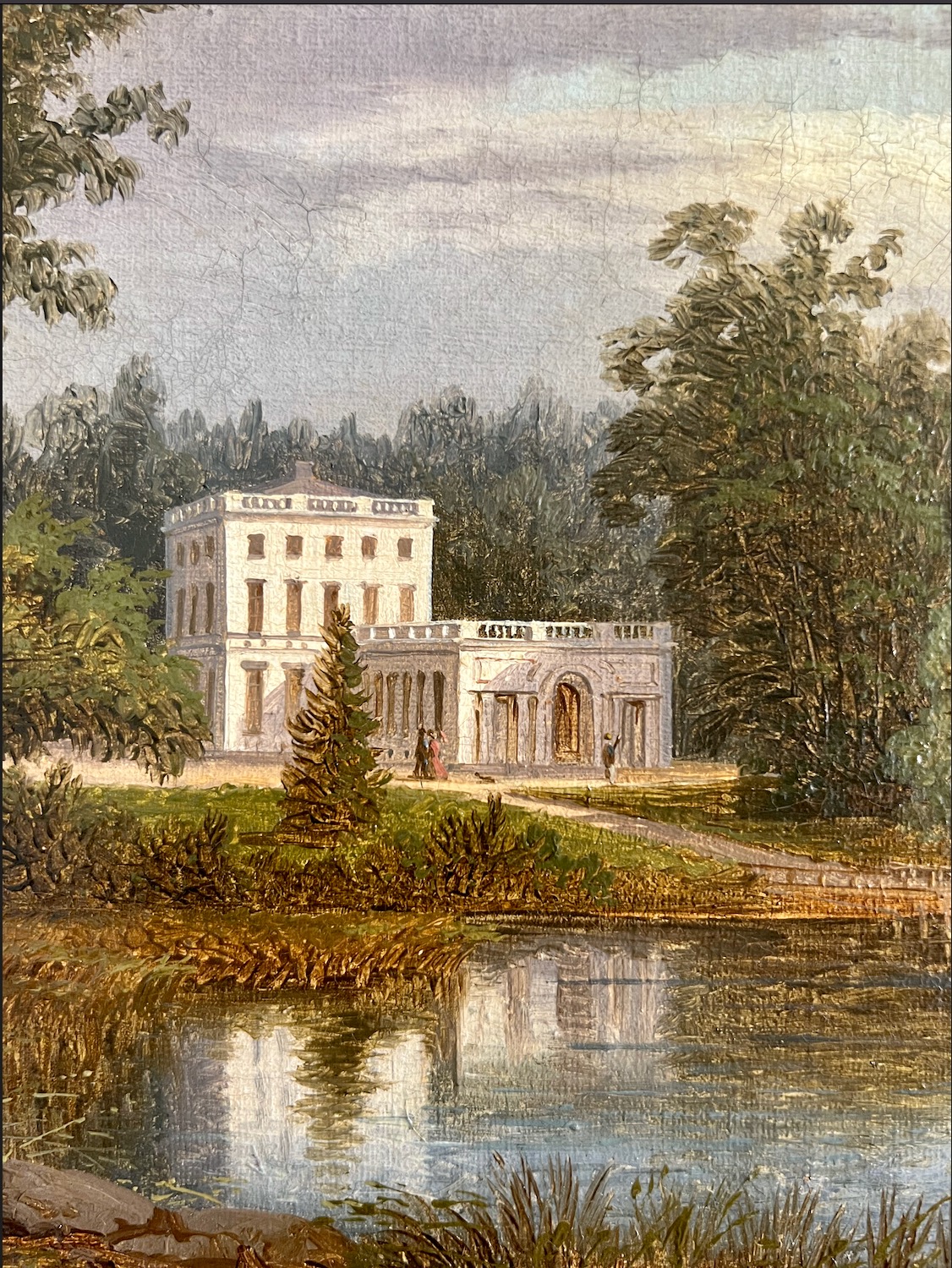
A very nice painting with a view of King Gustav III´s Haga Castle by Carl Abraham Rothstén, (1826 - 1877) Oil on canvas, signed with monogram CAR. Probably painted in the third quarter of the 19th century. The painting has detailed details like an elegant couple with a sun umbrella and a man walking by the pavilion. In the water, Brunnsviken are two men fishing with fishing rods and in the distance by the horizon is a sailing boat passing.
Rothstén was a Swedish landscape painter and draftsman.
Rothstén was a craft painter for many years before he switched to the career of an artist and trained at the Royal Academy of Fine Arts in Stockholm. He devoted himself exclusively to landscape painting and took his motifs from Stockholm and its surroundings but also from Italy. Many of the works are coastal motifs or marine views. Rothstén is represented in the National Museum in Stockholm and others.
Gustav III's Pavilion is a royal pavilion at the Haga Park, 2 km north of Stockholm. As a highlight in Swedish art history, the Pavilion is a fine example of the European neoclassicism of the late 18th century in Northern Europe.
The pavilion was built in 1787 by the architect Olof Tempelman with detailed instructions from King Gustav III who was highly personally involved in the project, producing some basic designs himself.
The designer Louis Masreliez– who became a trendsetter in the interior design of the period– was commissioned for the interiors. The pavilion was just one of many great plans and visions that Gustav III had for the Haga Park, many of which made it no further than the drawing board. Gustav III made use of the pavilion for a few years before his assassination. It was from the pavilion that Gustav III left for the fateful masquerade ball at the Opera on 16 March 1792. After the assassination of Gustav III, Duke Charles used the pavilion as his temporary residence.
In the 1840s, King Oscar I commissioned a restoration of the building by architect George Theodor Chiewitz.
Between 1937 and 1946, the Pavilion underwent a major restoration under palace architect Ragnar Hjort. During this time, thanks to the discovery of the original Masreliez designs for each room, it was possible to restore the interior to its original form.
Measurements include the frame.