

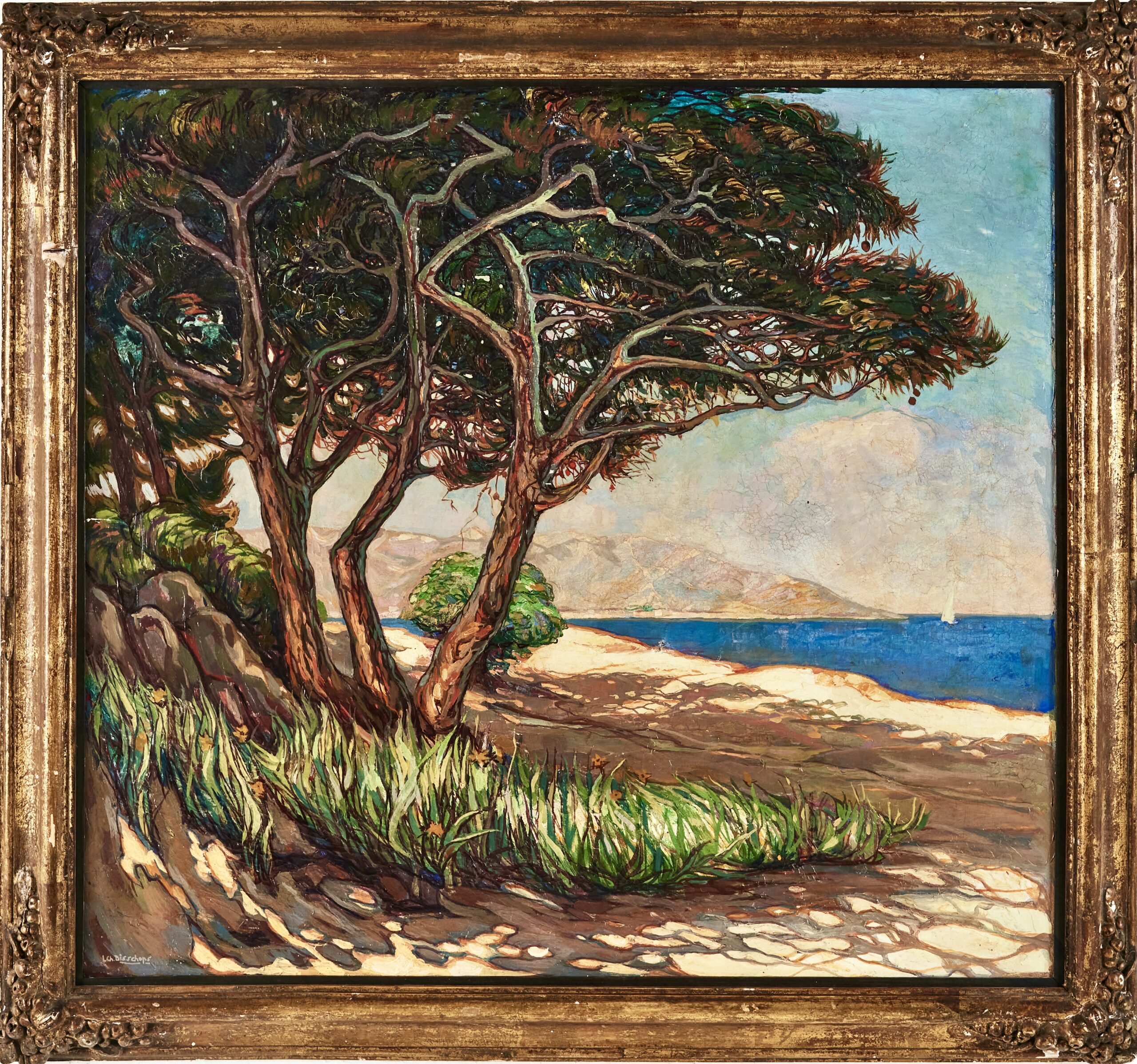
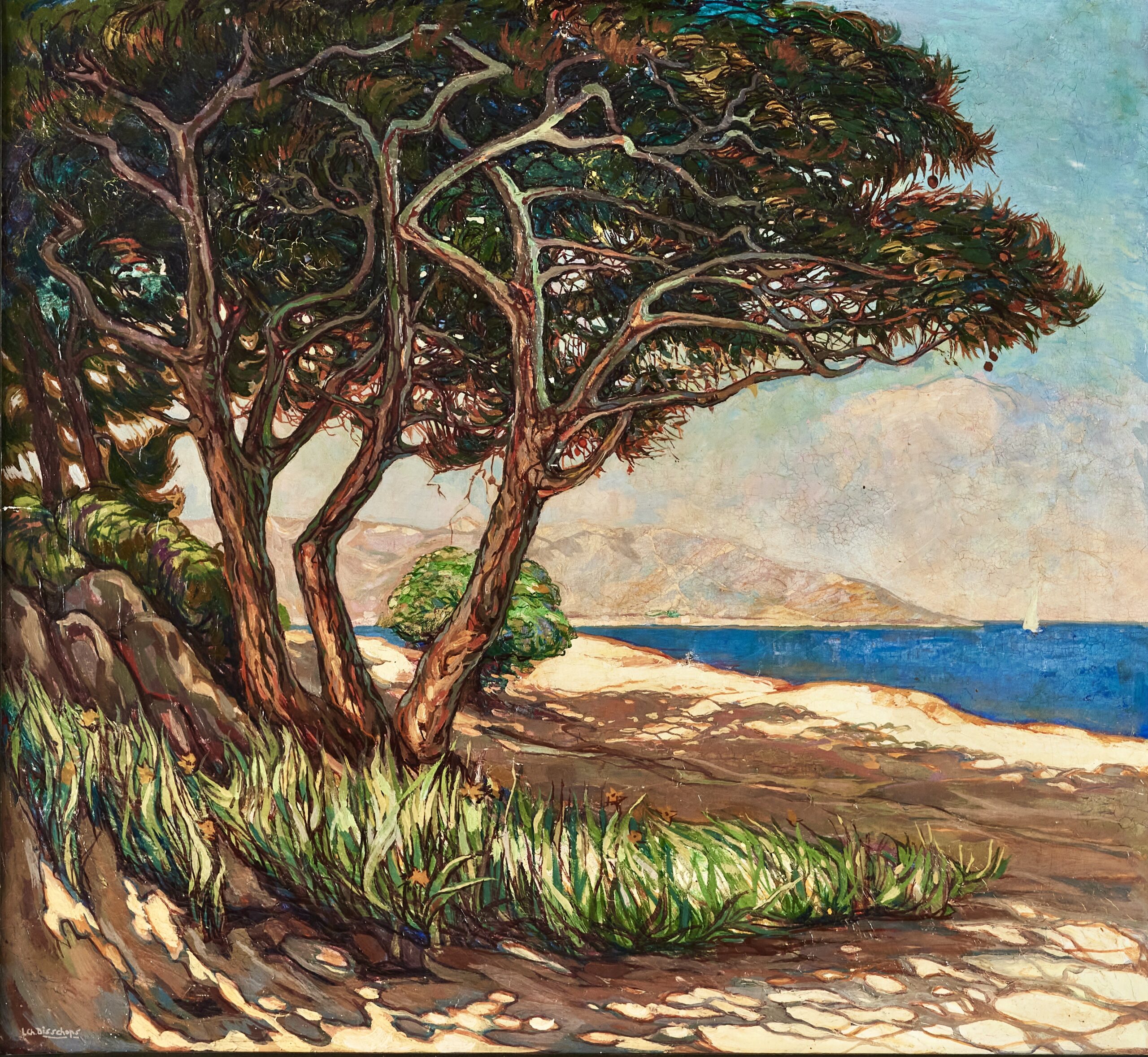
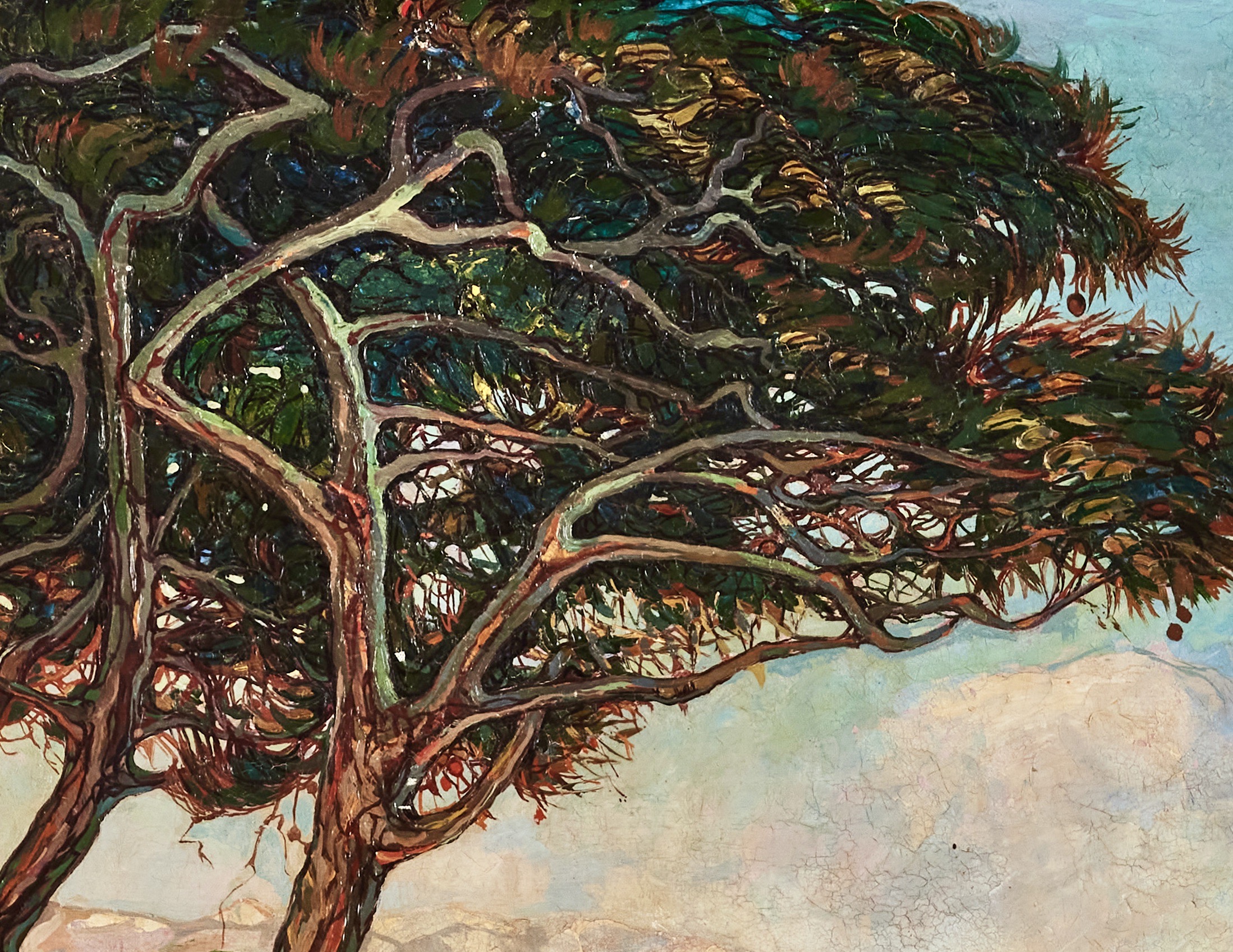
Charles Bisschops (1894-1975) – Southern Coast with Beach, Trees and Sailboat
Price:19000 SEK1691 EUR1824 USDChange Currency
Dimensions: Height 71 cm (28 inches) x Width 76 cm (30 inches) x Depth 3 cm (2 inches)
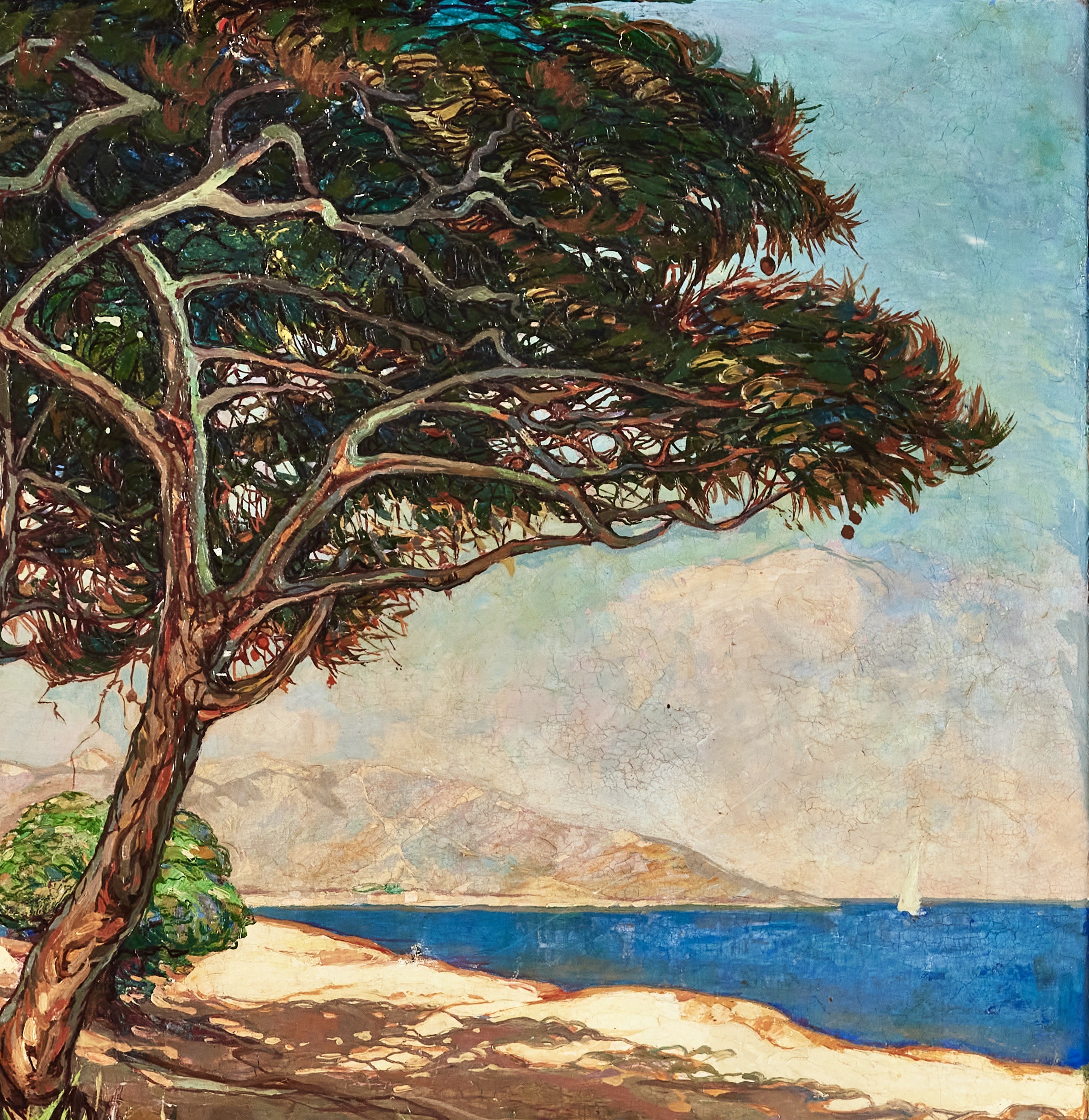
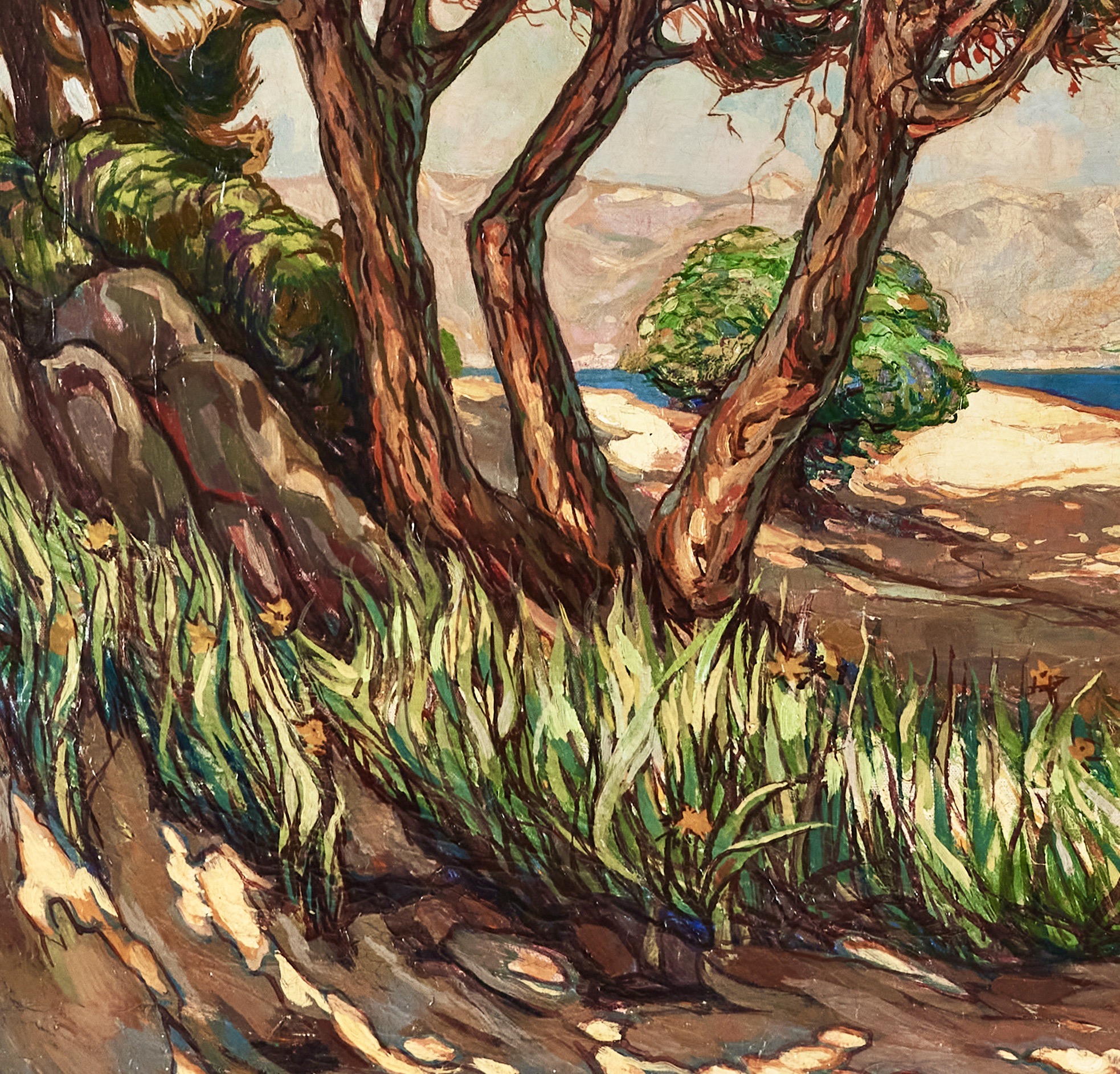
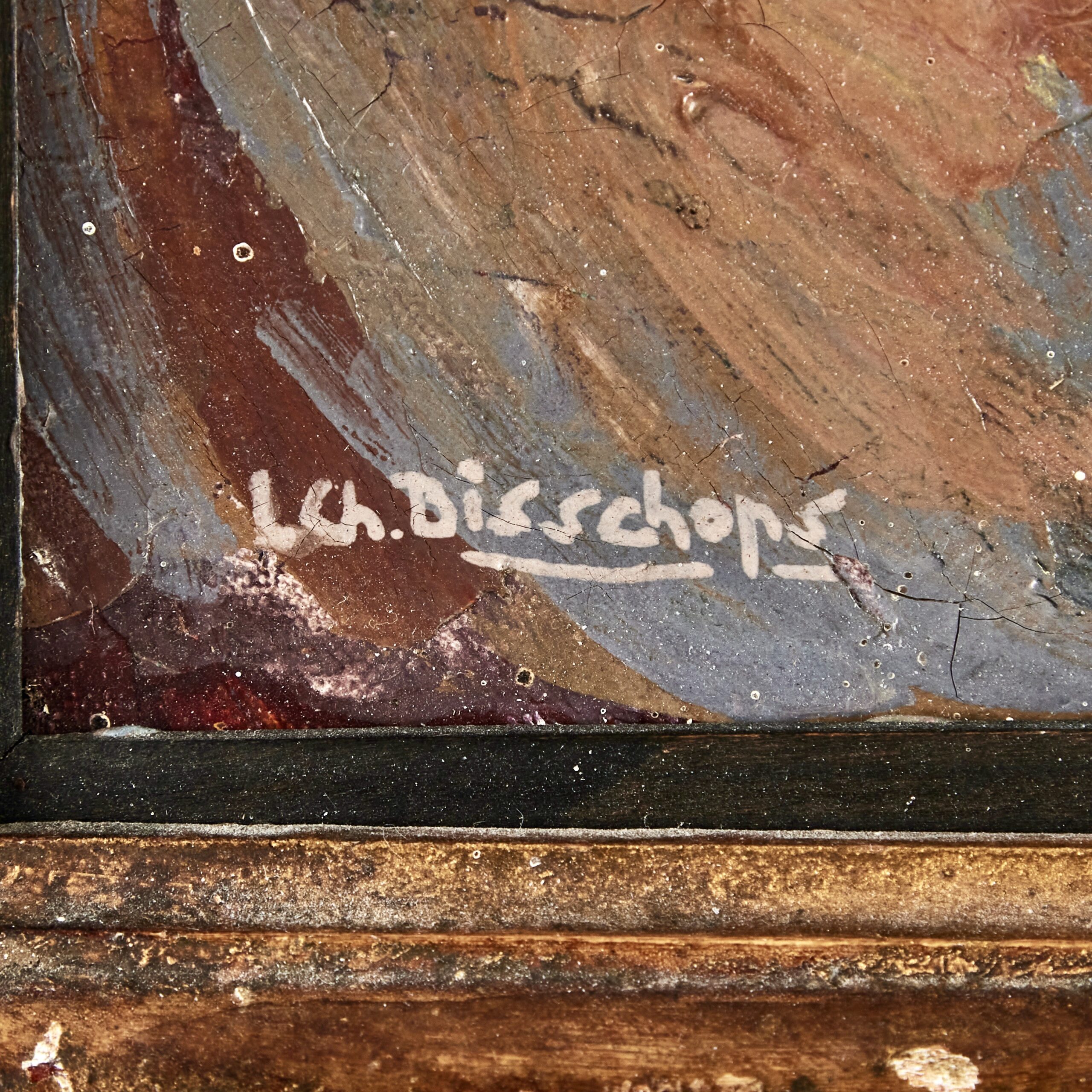
A Southern Coastal Landscape by Charles Bisschops. This oil on canvas, signed L. Ch. Bisschops, depicts a southern coastal scene with a beach bordered by trees. Across the bay, mountains rise in the distance, while a sailboat glides toward the shoreline. Painted during the artist’s travels to Algeria, France, Italy, or Spain in the early 1920s. Executed in an impressionistic manner, the painting captures the fleeting effects of sunlight on sea and land through a bright palette and loose, vibrant brushstrokes. Rather than focusing on precise detail, Bisschops emphasizes atmosphere and color harmony, creating an evocative sense of place that resonates with the broader European impressionist tradition.
Charles Louis Bisschops (1894–1975) was born in Liège, Belgium. In 1912 he entered the Royal Academy of Fine Arts in Brussels, where his principal teachers were Constant Montald and Jean Delville. Their emphasis on decorative composition and refined color left a lasting impression on his early development. His studies were interrupted by the outbreak of the First World War: he volunteered in 1914, was wounded twice, and remained on active duty until the Armistice in 1918. After the war, he returned to the Academy for one year, where he met Lucienne, daughter of the sculptor Jules Coessens, whom he married in 1920.
In 1921 the couple traveled to Algeria, beginning a decade of sojourns that also took them to Italy, Spain, and the south of France. These journeys proved transformative for Bisschops’s art. The strong Mediterranean and North African light inspired a brighter palette, more vibrant contrasts, and a freer, impressionistic handling of paint. His works from this period often depict coastal views, harbors, village streets, and local festivities. By the late 1920s, he had gained recognition through regular exhibitions at leading Belgian institutions and received high critical praise. Although best known for his landscapes and seascapes, he also produced figurative works, including dancers and portraits, though these are comparatively rare.
In his later years, particularly after settling in Rossignol (province of Luxembourg, Belgium) in the mid-1960s, Bisschops turned increasingly to watercolour and gouache. These works, often smaller in format, retained his characteristic luminosity and sensitivity to atmosphere. He died in Rossignol in 1975.
Bisschops exhibited frequently in Belgium, including the Brussels salons and triennials, as well as the Salon des Artistes Français in Paris. His works were admired for their atmospheric qualities and luminous palette. He also collaborated with Alfred Bastien and Charles Swyncop on the monumental Panorama de la bataille de Dinant, an important patriotic project after the First World War.
His paintings are represented in Belgian museums in Mons, Charleroi, and Tournai, as well as in collections abroad, including Riga and Martinique. Exhibition records indicate his participation in the Exposition Générale des Beaux-Arts (Brussels, 1914) and subsequent Belgian triennials.
Works are documented in Belgian museum catalogues, including Musée des Beaux-Arts de Charleroi, Musée des Beaux-Arts de Mons, and Musée des Beaux-Arts de Tournai.