

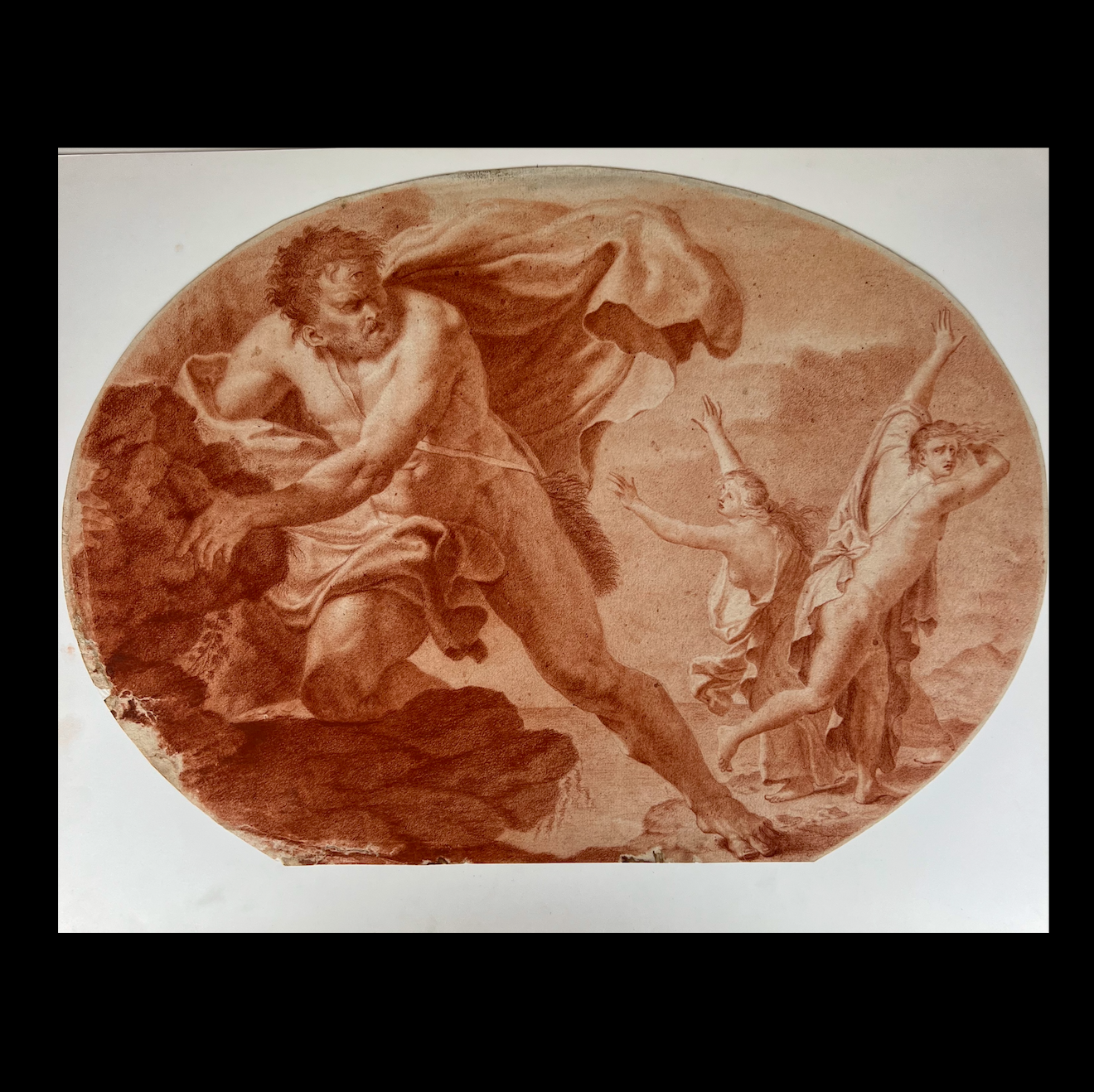
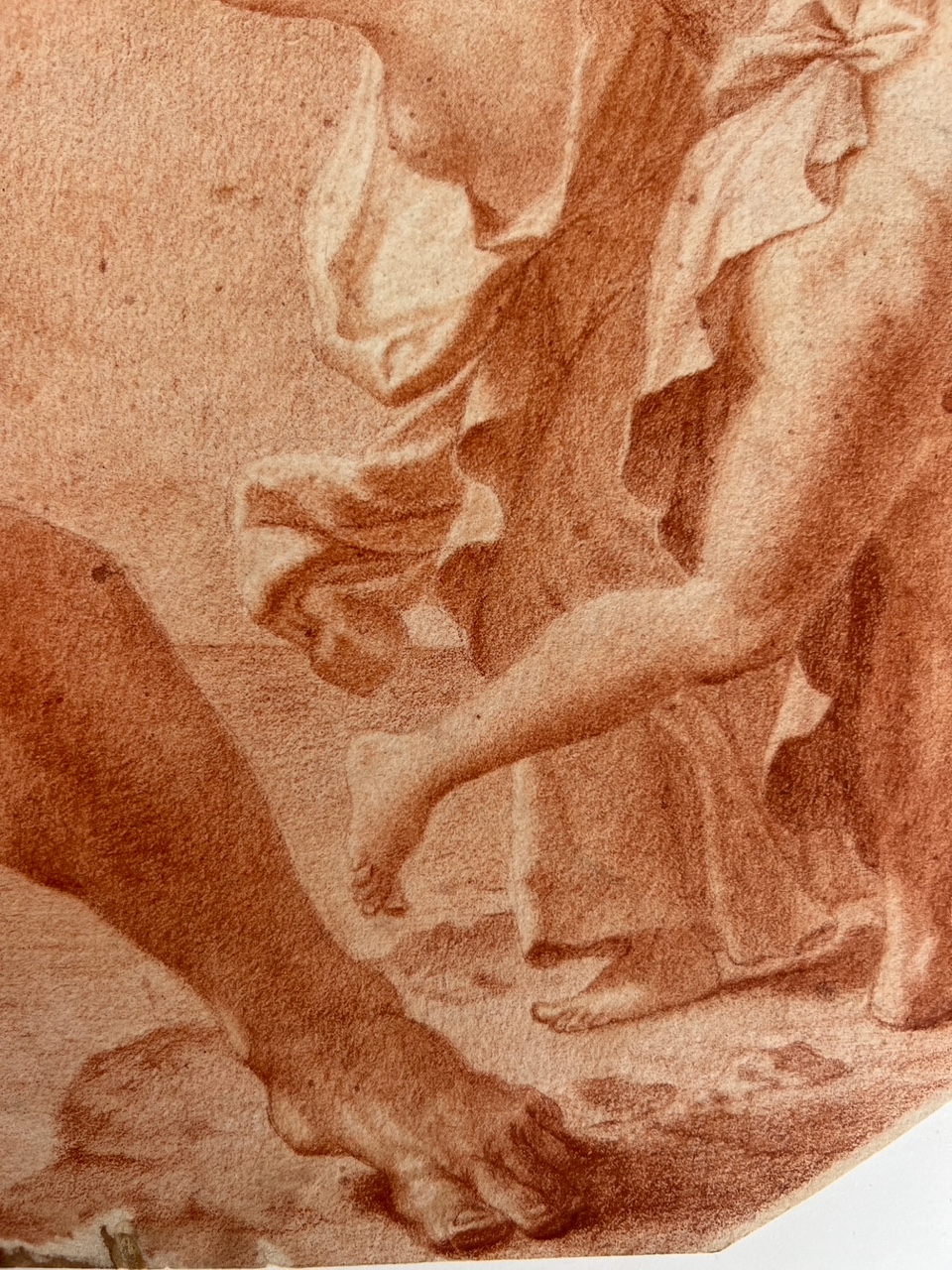
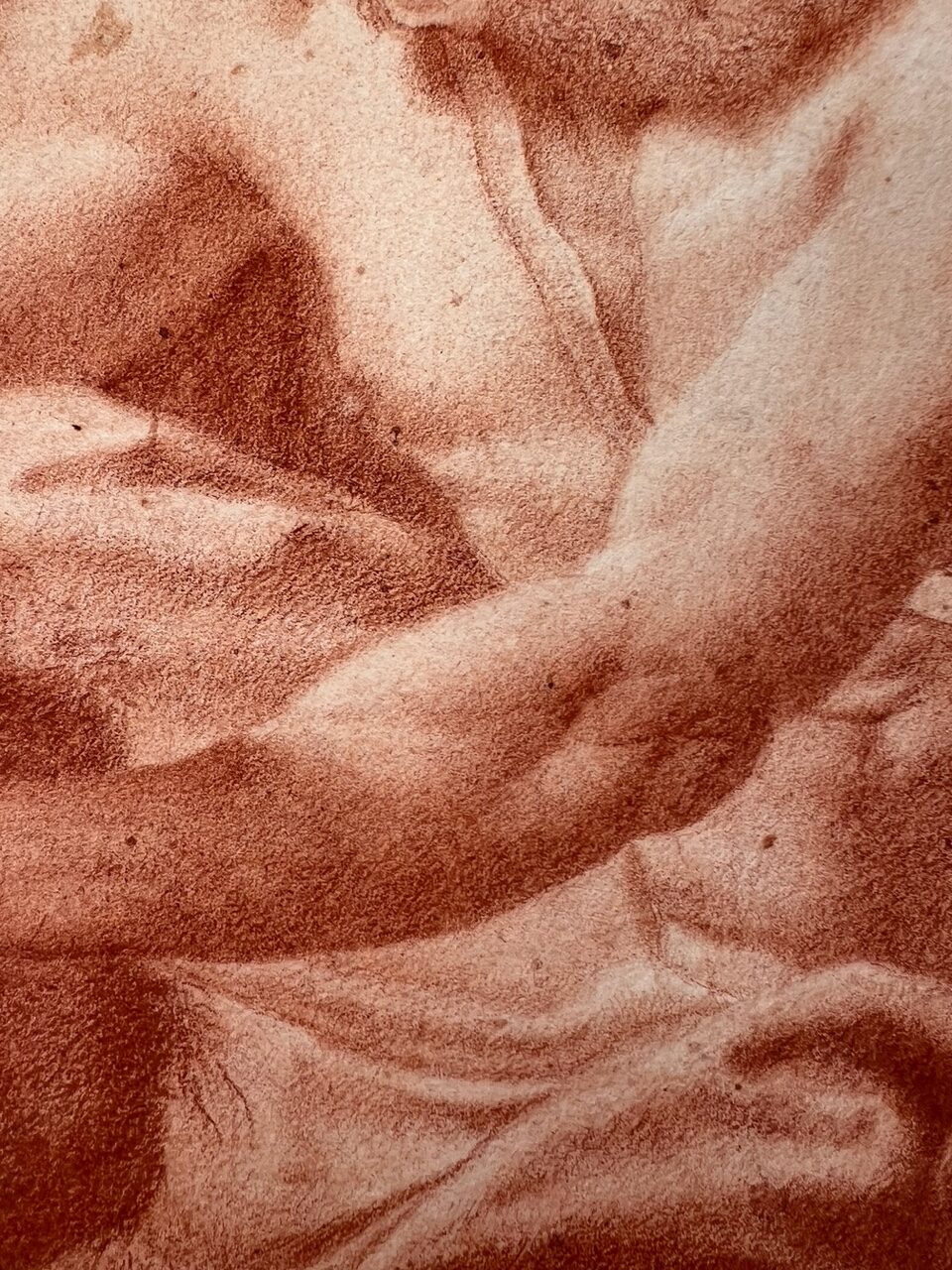
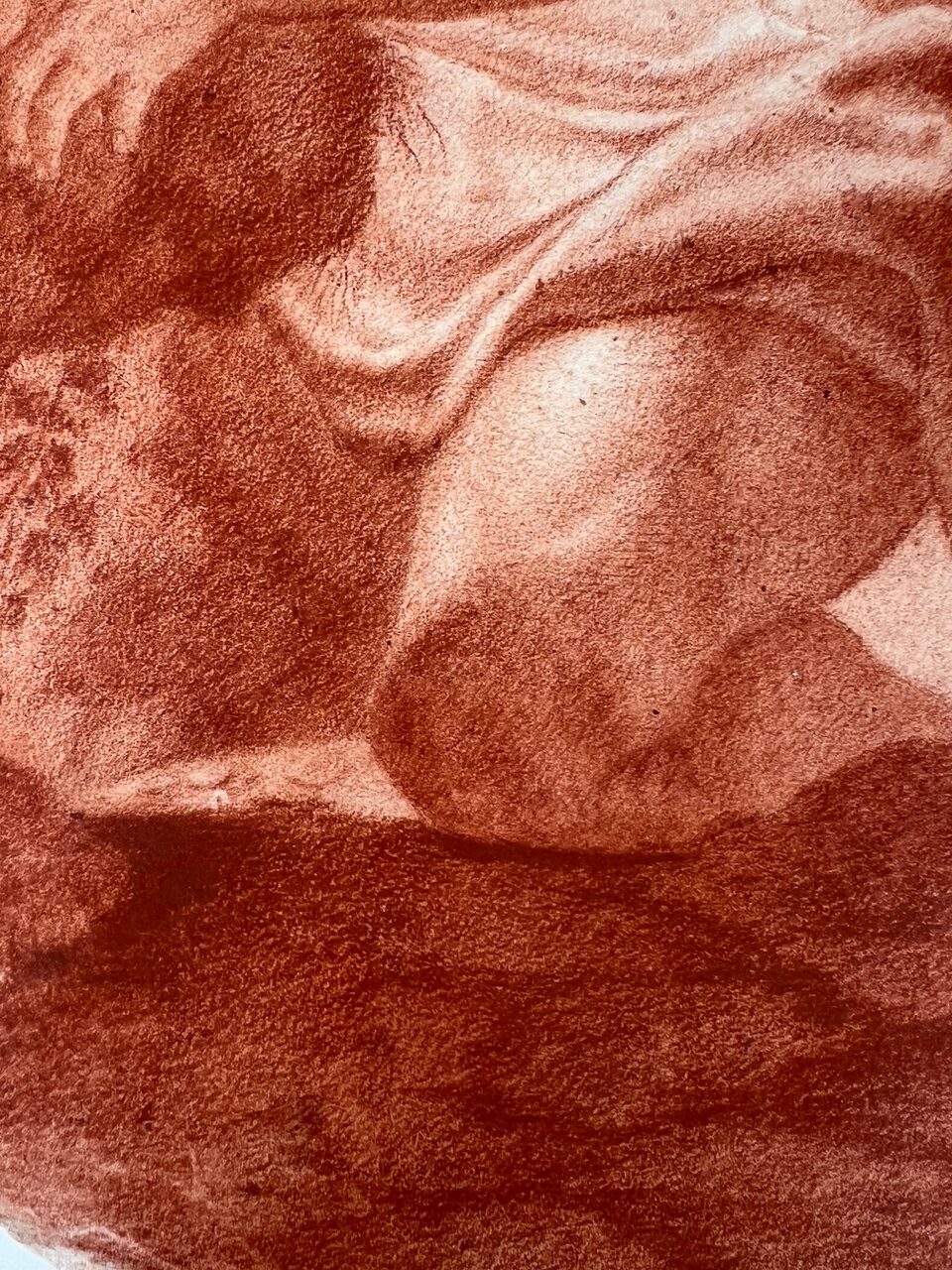
Italian School 18th Century Red Chalk Drawing, Polyphemus, Acis and Galatea
Price:12000 SEK1068 EUR1152 USDChange Currency
Dimensions: Height 36 cm (15 inches) x Width 52 cm (21 inches)
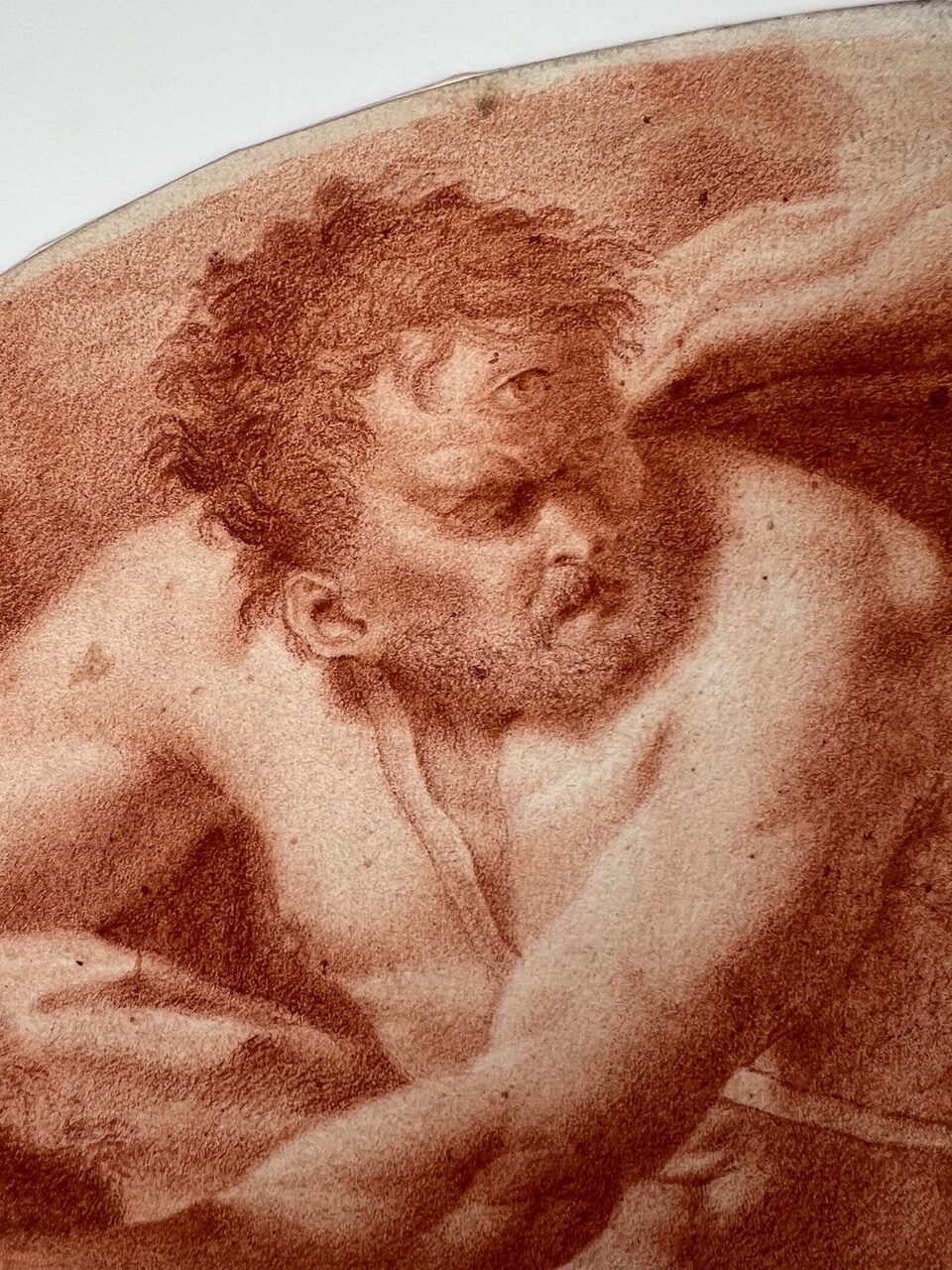
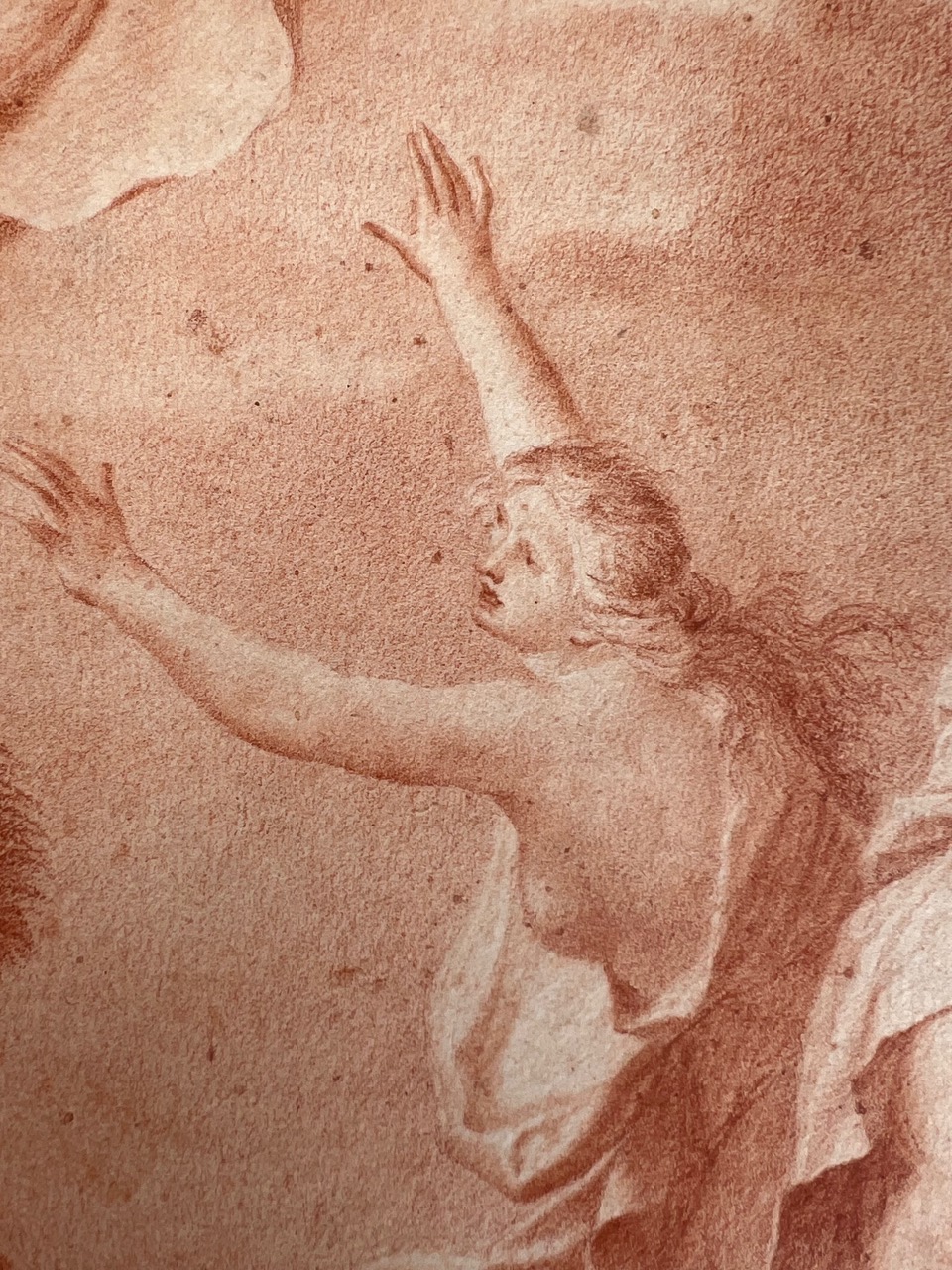
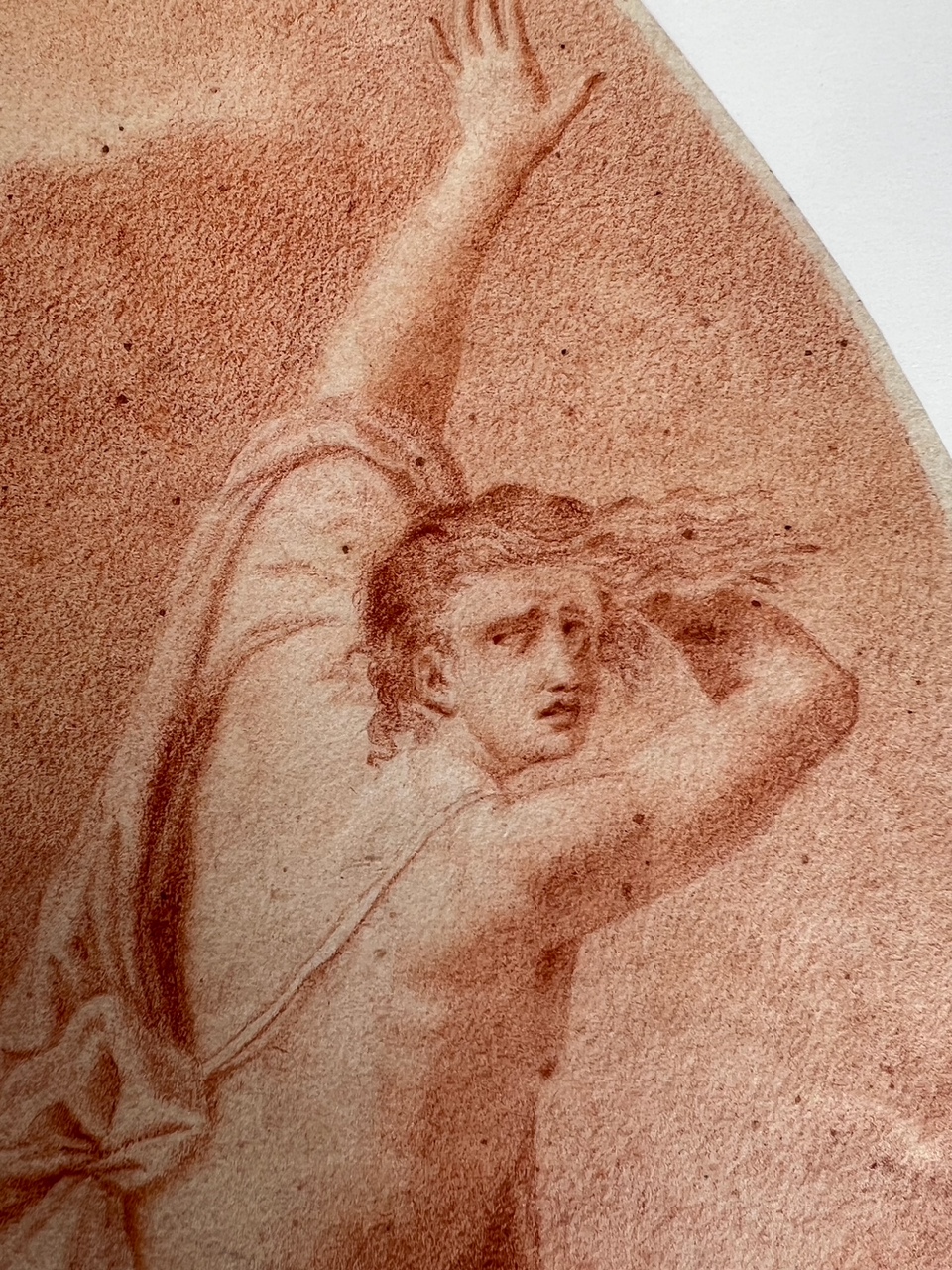
An Italian red chalk drawing depiction on paper, probably 17th or 18th century, illustrating the dramatic scene of Polyphemus hurling a boulder at Acis and Galatea. Attributed to an unidentified, probably Italian master, the composition portrays a narrative from ancient Greek mythology where the jealous giant cyclops Polyphemus, in a fit of rage, kills Acis by crushing him with a massive rock. This piece seems to draw inspiration from Annibale Carracci's renowned ceiling frescoes in the Palazzo Farnese, Rome, specifically the "Loves of the Gods" series painted circa 1597–1601. One particular fresco in this series depicts Polyphemus in the act of throwing a rock at Acis and Galatea, suggesting that the artist of this drawing may have been influenced by Carracci's interpretation. While there are notable differences, the compositional similarities indicate a study to the earlier masterpiece. Throughout the centuries, numerous artists visited the Farnese Gallery to study and draw inspiration from Carracci's work, underscoring its significant impact on subsequent art.
The subject matter derives from ancient Greek mythology, specifically the tale of Acis, Galatea, and Polyphemus, made famous through Ovid’s Metamorphoses. The Cyclops Polyphemus, a fearsome, one-eyed giant, is deeply in love with Galatea, a beautiful sea-nymph. However, Galatea’s affections lie with Acis, a handsome young mortal shepherd. Enraged by jealousy upon discovering the lovers together, Polyphemus unleashes his wrath by ripping a boulder from the earth and hurling it at Acis, fatally crushing him. Stricken with grief, Galatea transforms Acis's blood into a river spirit, thus granting him immortality.
The scene has been a powerful symbol in Western art and literature for centuries—portraying unrequited love, jealousy, and tragic loss. It has inspired countless works across time, from Roman frescoes to Baroque painting and Romantic poetry.
Annibale Carracci (1560–1609) was a pivotal figure in Italian Baroque painting. Born in Bologna, he, along with his brother Agostino and cousin Ludovico, founded the Carracci Academy, aiming to reform art by emphasizing naturalism and the study of classical models. Carracci's work is characterized by its harmonious composition, dynamic movement, and vivid depiction of human emotion. His frescoes in the Palazzo Farnese, particularly the "Loves of the Gods" series, are considered masterpieces that bridge the Renaissance and Baroque periods. Carracci's innovative approach and dedication to blending classical traditions with contemporary techniques significantly influenced the trajectory of European art.