

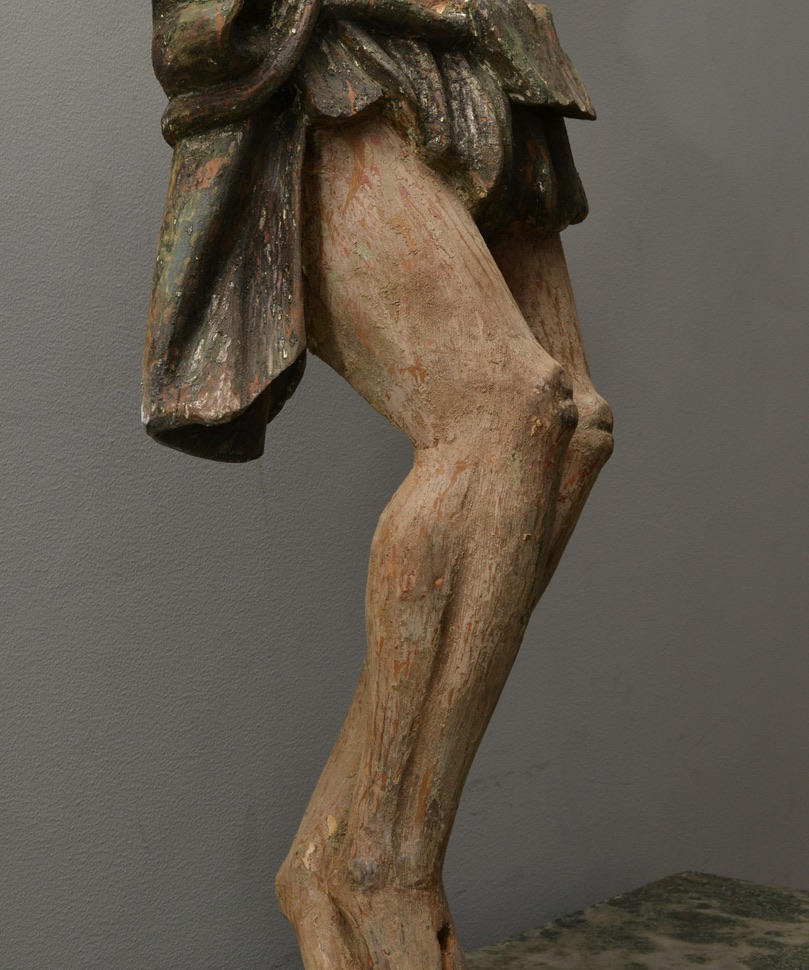
15th Century Corpus Christi Wood Sculpture
Price:95000 SEK8455 EUR9120 USDChange Currency
Dimensions: Height 123 cm (49 inches) x Width 90 cm (36 inches) x Depth 24 cm (10 inches)
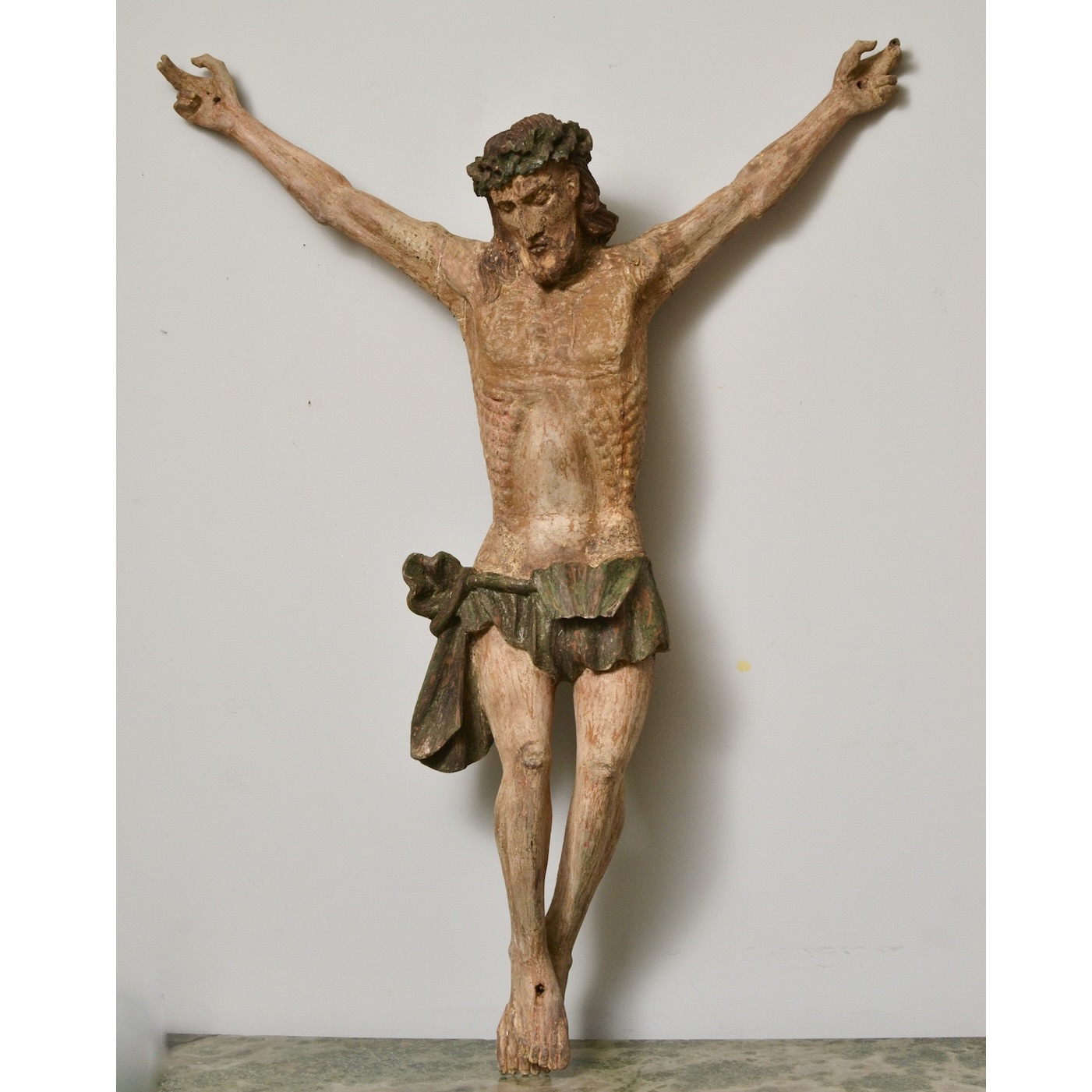
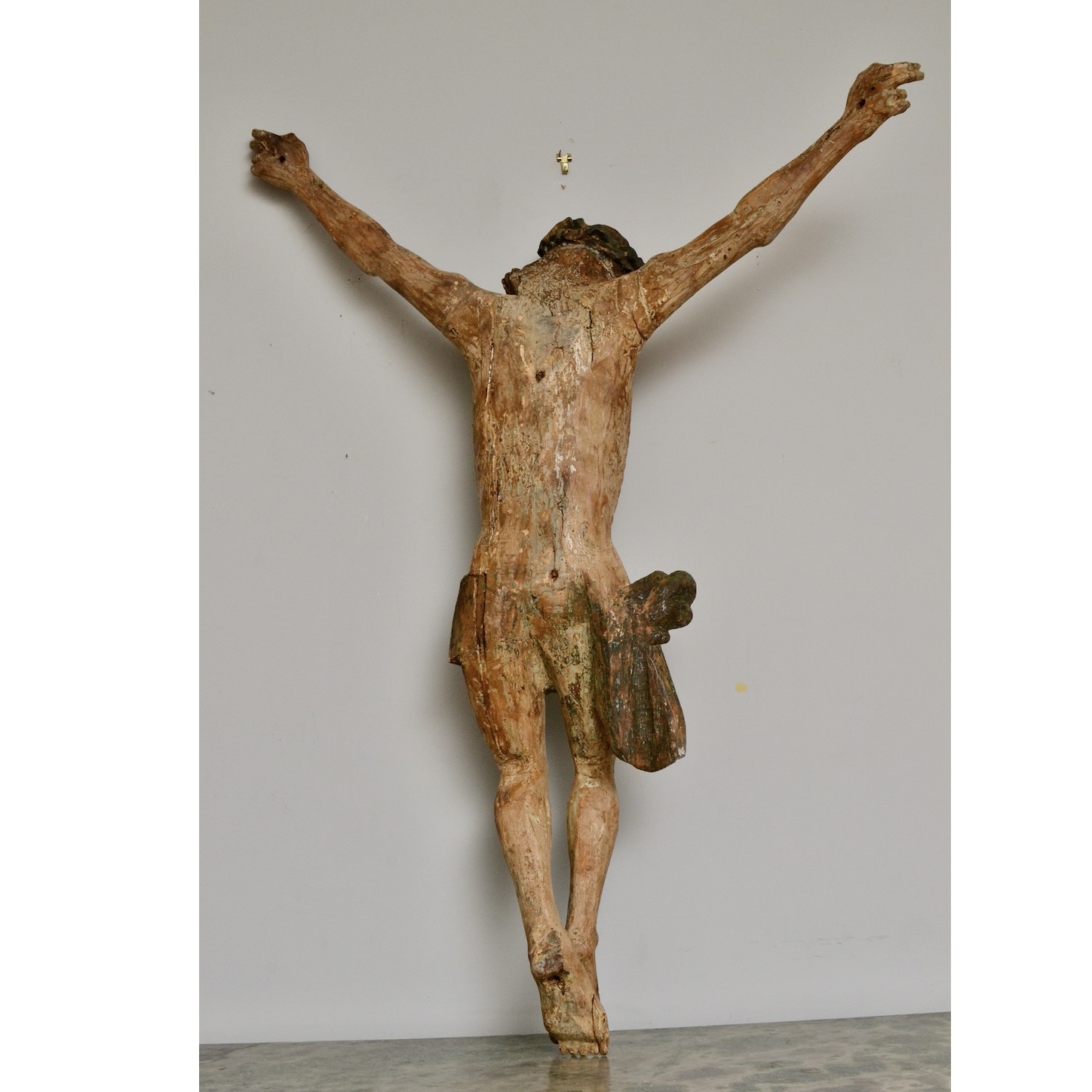
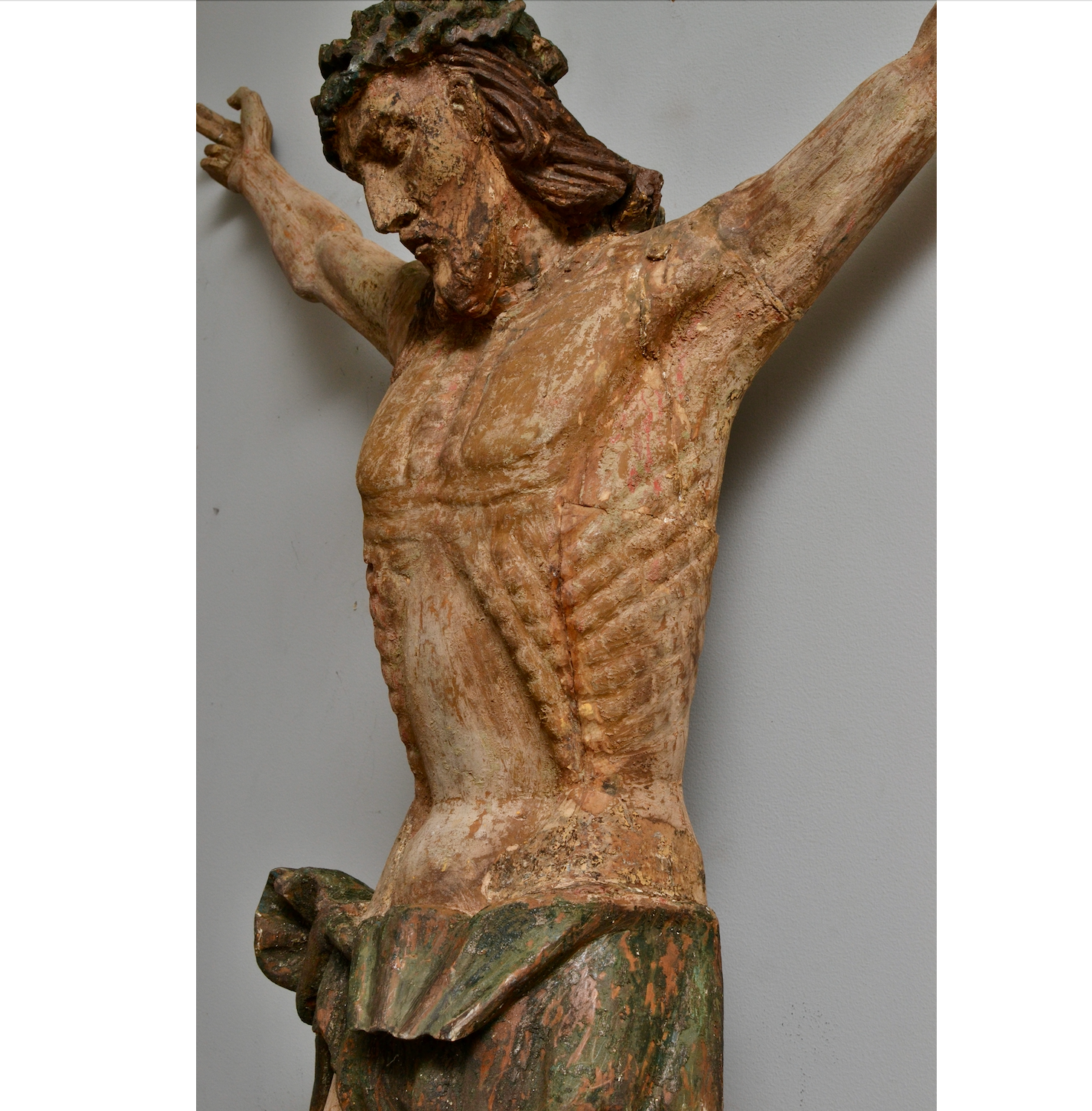
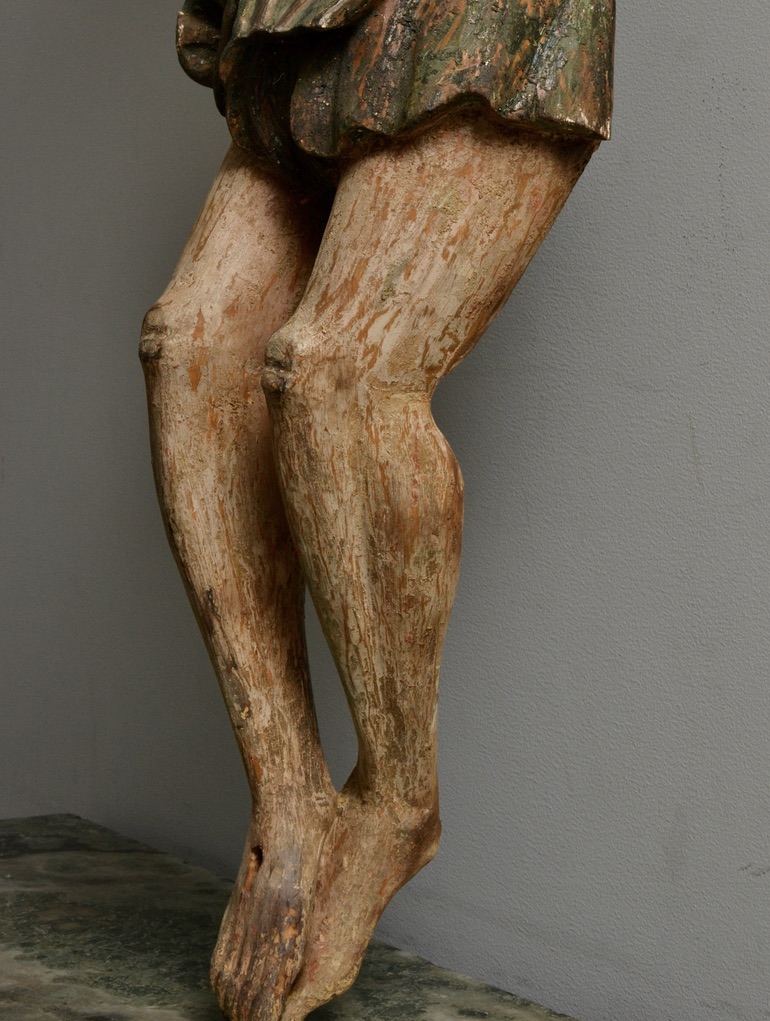
Rare late 15th century or early 16th century Gothic Corpus Christi wood sculpture. Probably North German or South Sweden. This large Christ sculpture has a worn beautiful original polychrome painted surface. It is a striking sculpture with Christ´s suffering clearly expressed. The way the rib cage is sculpted is very unusual. There is a Corpus Christi sculpture in the Historic museum of Stockholm with a similar treatment.
Sometimes relics where hidden in these sculptures and it is possible that there is a hidden space in our Christ on his left side where the ribs are. A lid looking piece with part of his ribs sculptured to be part of the rest is visible on the left side opposite his wound.
The depiction of Jesus hanging on a cross has roots dating back to 4th century Rome. Gothic art, which emerged in the 12th century, built on the foundations laid by Romanesque sculpture. The narrative focus and use of biblical symbolism continued to be central to Gothic art, but with a greater emphasis on realism and emotional expression than during the Romanesque period.
Gothic sculptors sought to depict figures and scenes with greater naturalism, a greater emphasis on emotional expression, with figures depicted in more dynamic and dramatic poses moving away from the more stylized forms of Romanesque art. The transition from Romanesque to Gothic art was a gradual one, with many of the same sculptors working in both styles, contributing to the development of a rich and diverse artistic tradition.
In the Romanesque crucifix, Christ has four nails, one in each hand and one in each foot with the legs depicted separated. During the Gothic period the four nails have been reduced to three, as the feet are now placed on top of each other and fastened with a single nail. The body hangs heavily to increase the feeling of pain and suffering for the viewer. One would feel spiritual movement and compassion at the sight of Christ's pain. The triumphant Christ has now instead become the sufferer.