

Johan Axel Wetterlund (1858-1927)
Price:28000 SEK2492 EUR2688 USDChange Currency
Dimensions: Height 26 cm (11 inches) x Length 35 cm (14 inches) x Depth 11 cm (5 inches)
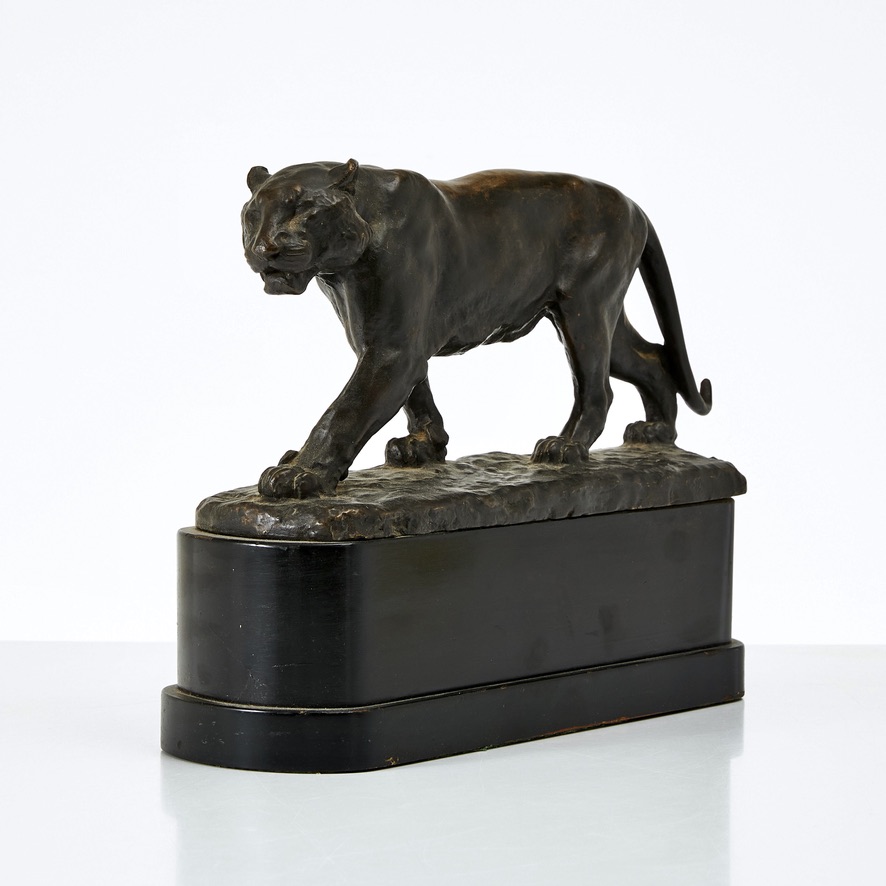
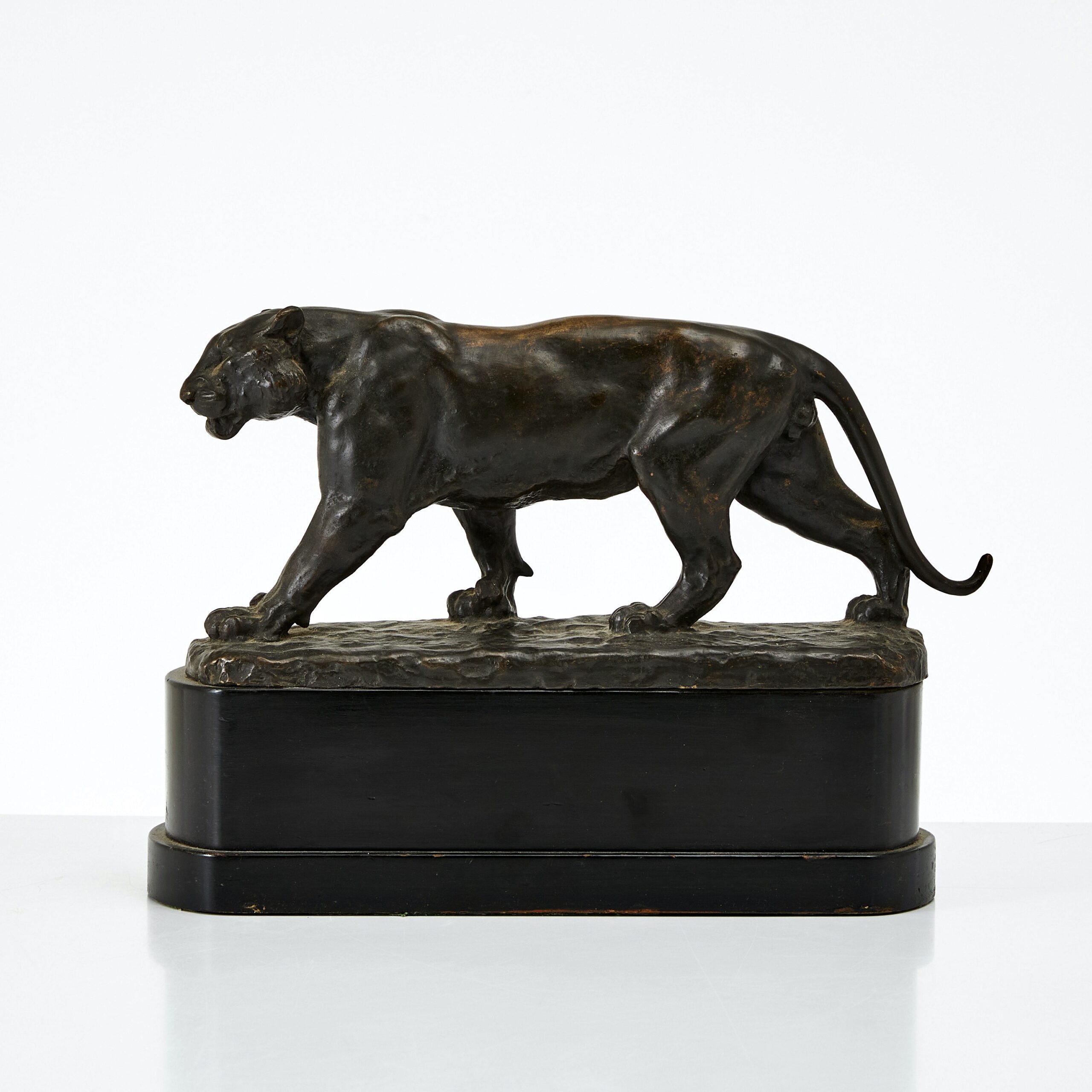
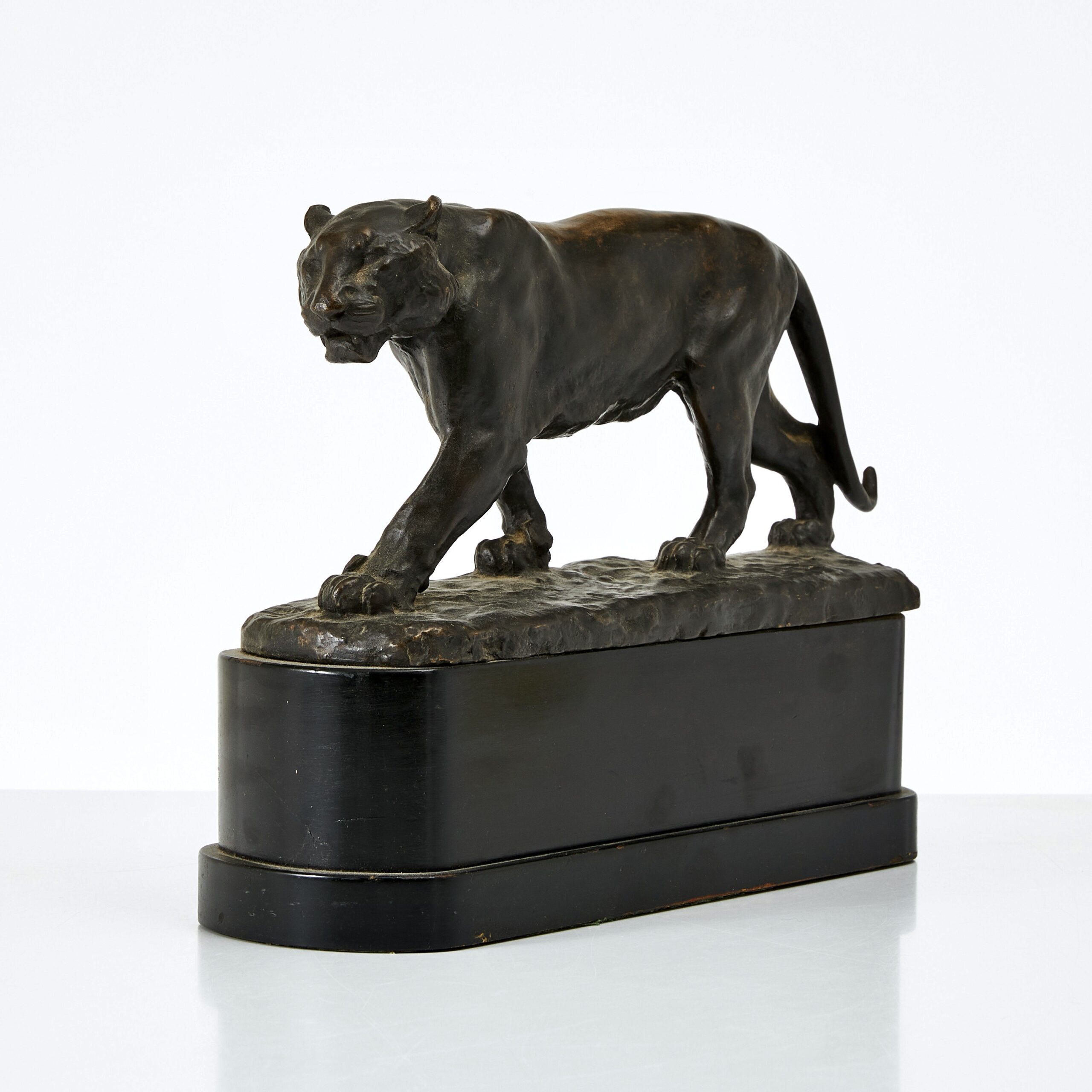
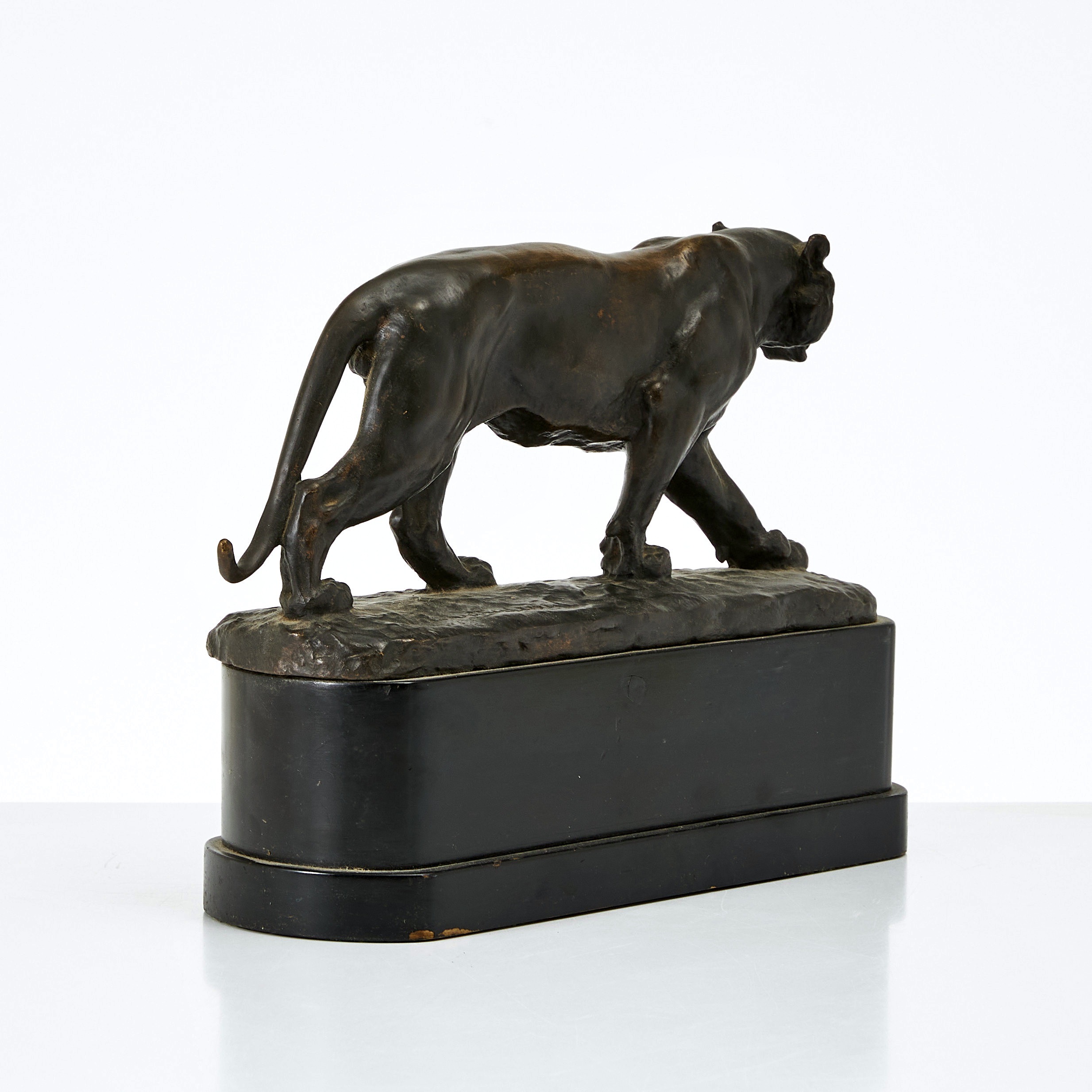
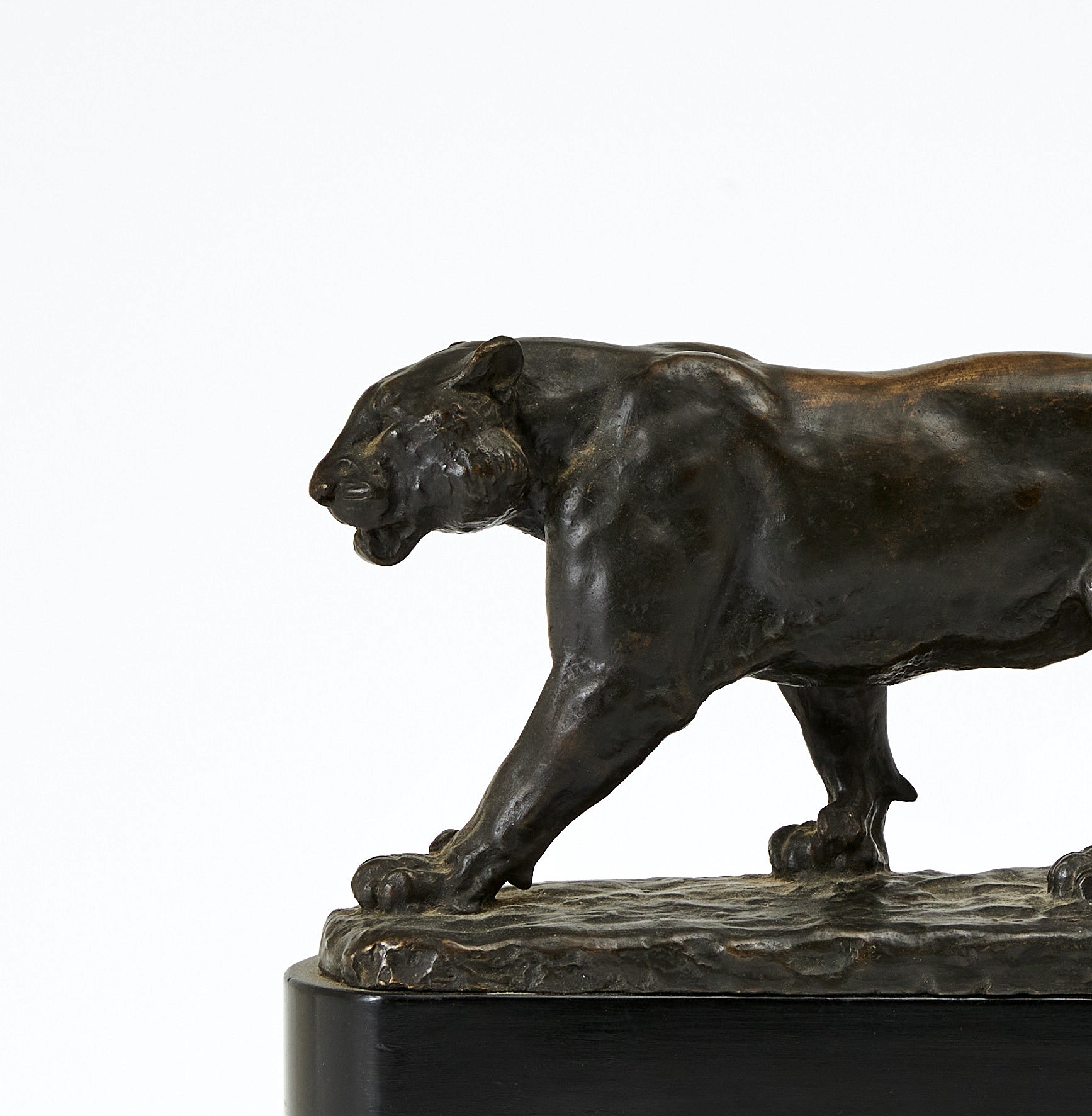
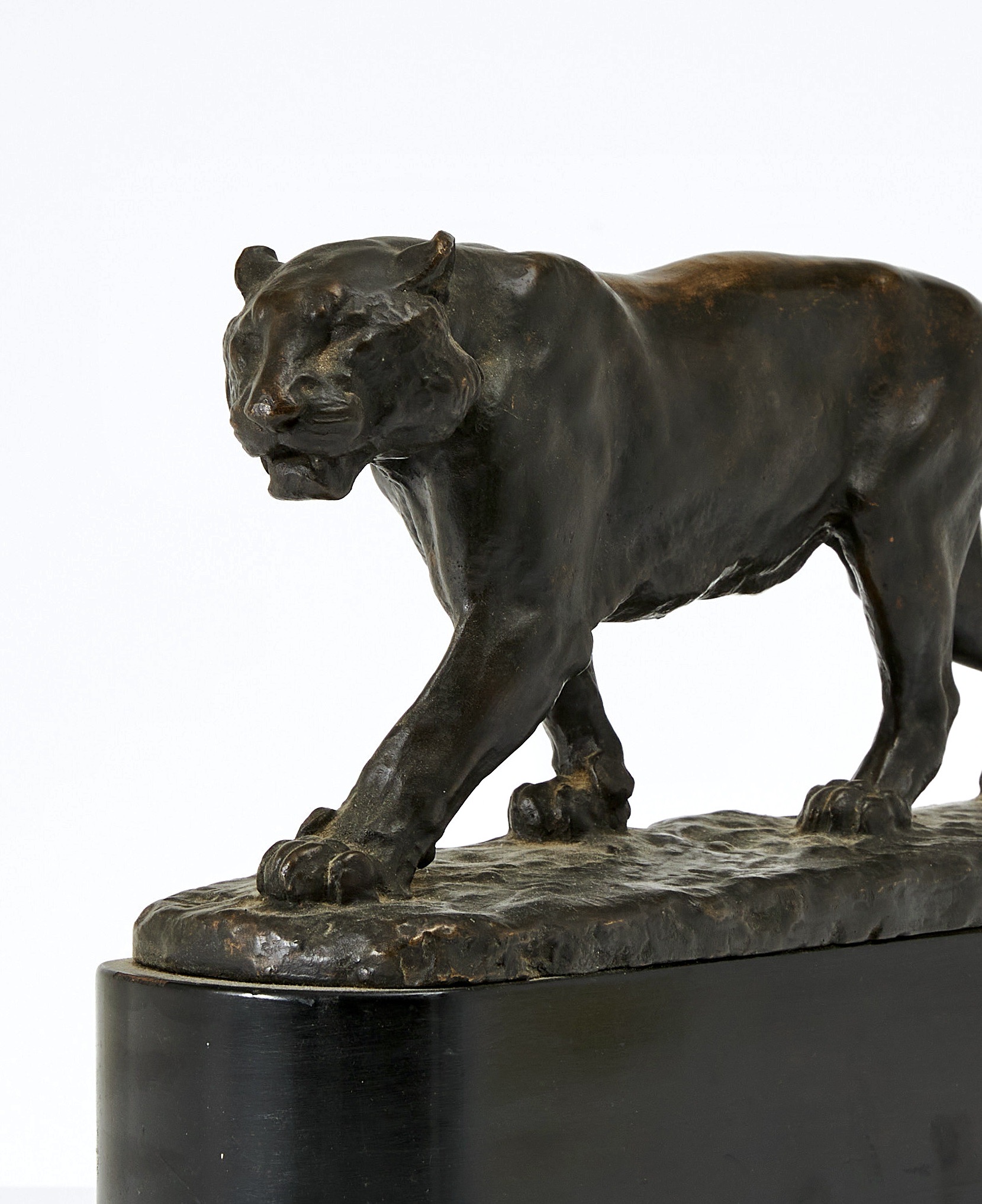
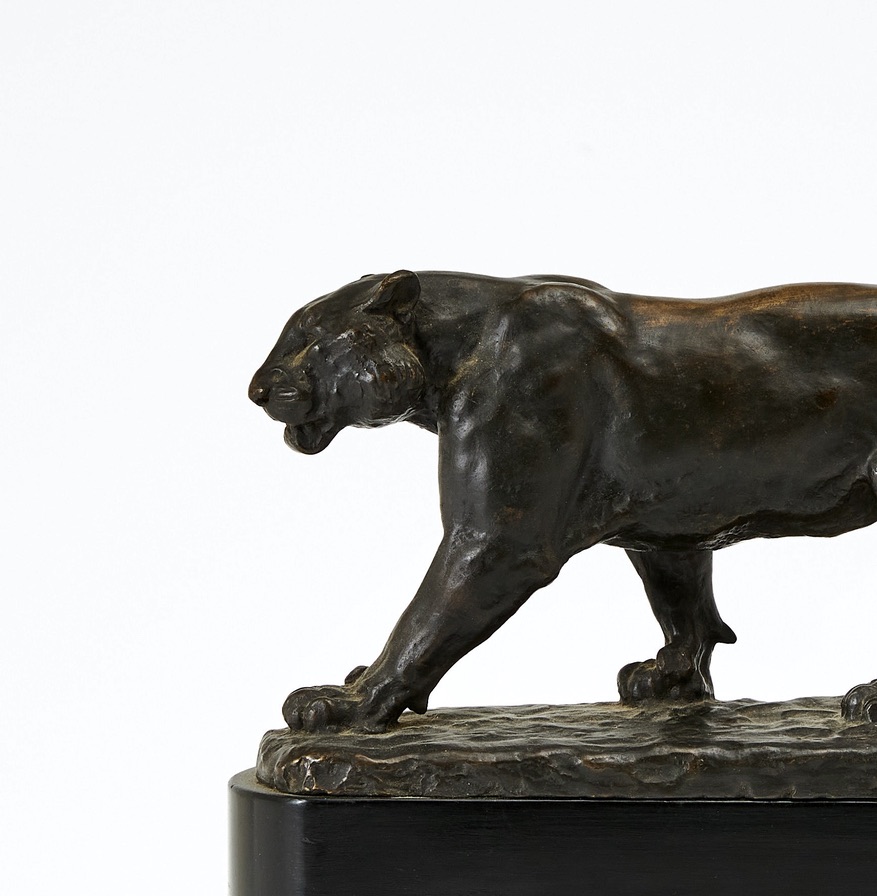
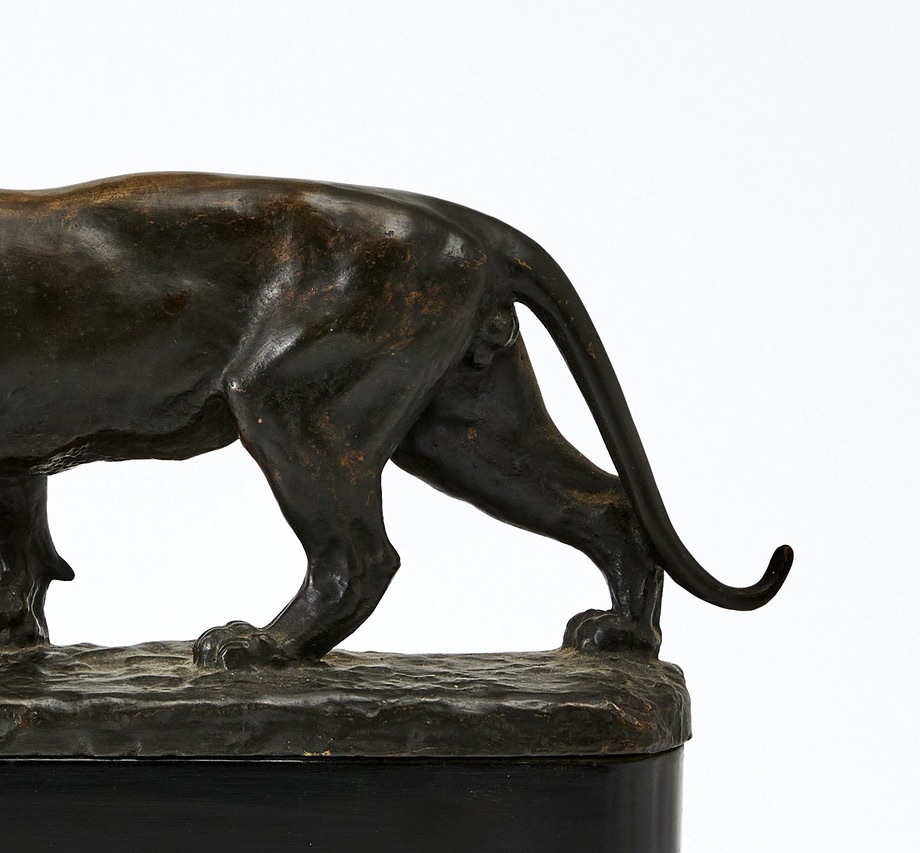
Sculpture of a walking tiger in dark patinated bronze by Johan Axel Wetterlund (1858-1927), signed J. A. Wetterlund, mounted on a black-painted wooden base. This finely modelled bronze sculpture of a walking tiger exemplifies the naturalistic precision and quiet strength characteristic of the Swedish sculptor Johan Axel Wetterlund. The animal’s muscular tension and balanced movement reveal Wetterlund’s technical skills and his observation of nature.
Johan Axel Wetterlund was born in Stockholm in 1858. He received his early artistic training at the Royal Swedish Academy of Fine Arts (Kungliga Akademien för de fria konsterna) in Stockholm, where he studied sculpture during the 1870s and 1880s under leading figures of the Swedish academic tradition. His early work reflects the influence of classical sculpture combined with a growing interest in naturalism, which would later define much of his artistic production.
After completing his studies, Wetterlund continued to develop his style through study trips abroad, particularly to Paris, where he became acquainted with the latest developments in European sculpture. He absorbed influences from the French animalier tradition, represented by artists such as Antoine-Louis Barye and Emmanuel Frémiet, whose focus on anatomical accuracy and expressive form clearly informed Wetterlund’s own depictions of animals and human figures.Wetterlund established himself in Stockholm as a sculptor of both public monuments and smaller bronze works, often with subjects drawn from Nordic history, mythology, and the natural world. His sculptures were regularly exhibited at the Royal Academy exhibitions and at the Swedish Art and Industry Exhibitions during the late 19th and early 20th centuries.
He became a member of the Swedish Artists’ Association (Svenska Konstnärernas Förening) and participated in numerous national art events. Wetterlund’s works were also shown internationally, reflecting the growing reputation of Swedish sculpture in Europe around the turn of the century.
Among his best-known public works are several portrait busts and commemorative sculptures found in Swedish cities, as well as smaller bronze figures portraying animals in motion, a subject for which he became particularly admired.
Wetterlund’s sculpture is characterised by a balance between academic discipline and naturalistic observation. Whether portraying animals or human figures, he sought to capture vitality rather than idealisation. His bronzes are often patinated in dark tones, giving them a restrained and timeless character.
In works such as the Walking Tiger, Wetterlund demonstrates a sensitivity to rhythm and proportion, reflecting both his formal training and his empathy for the living subjects he modelled.