

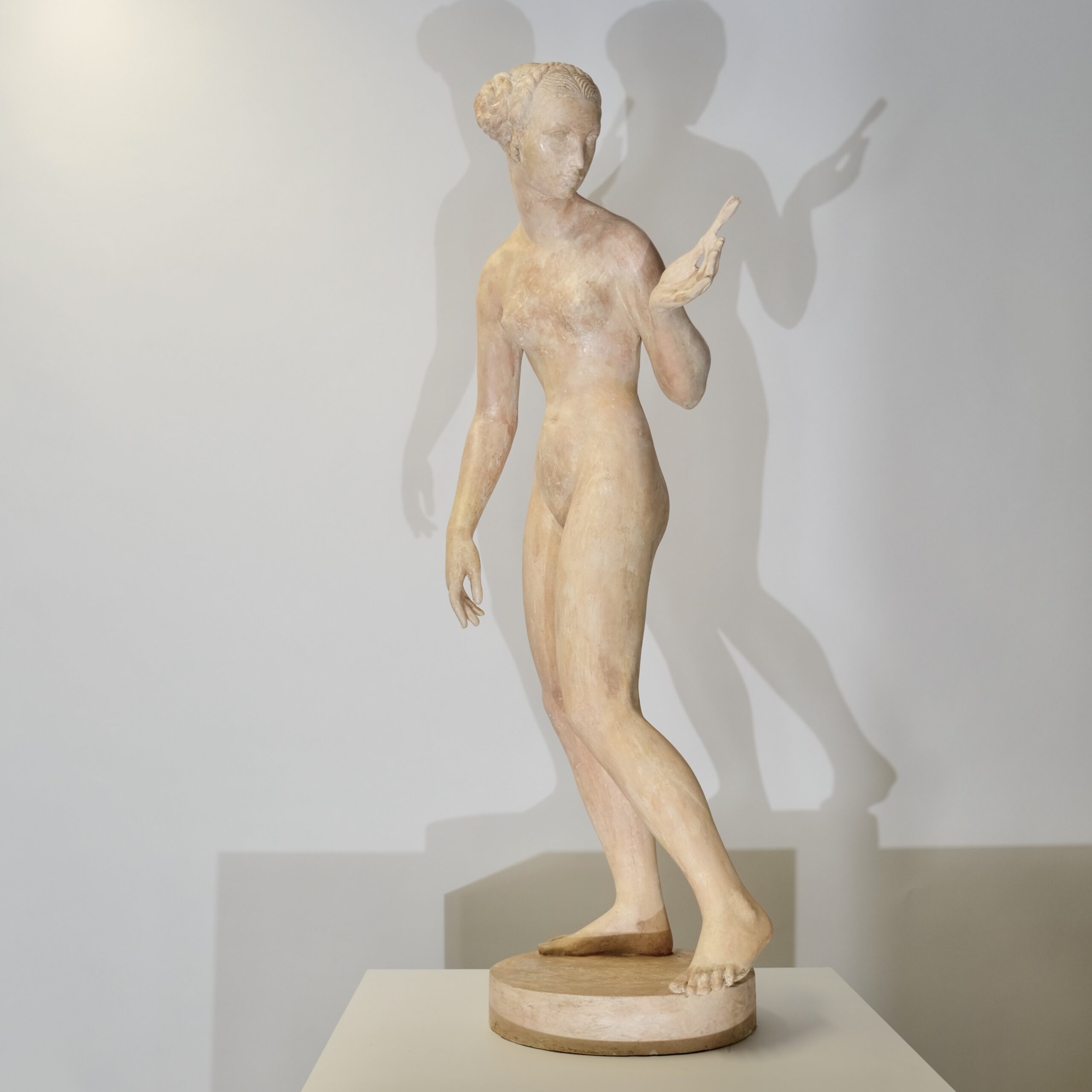
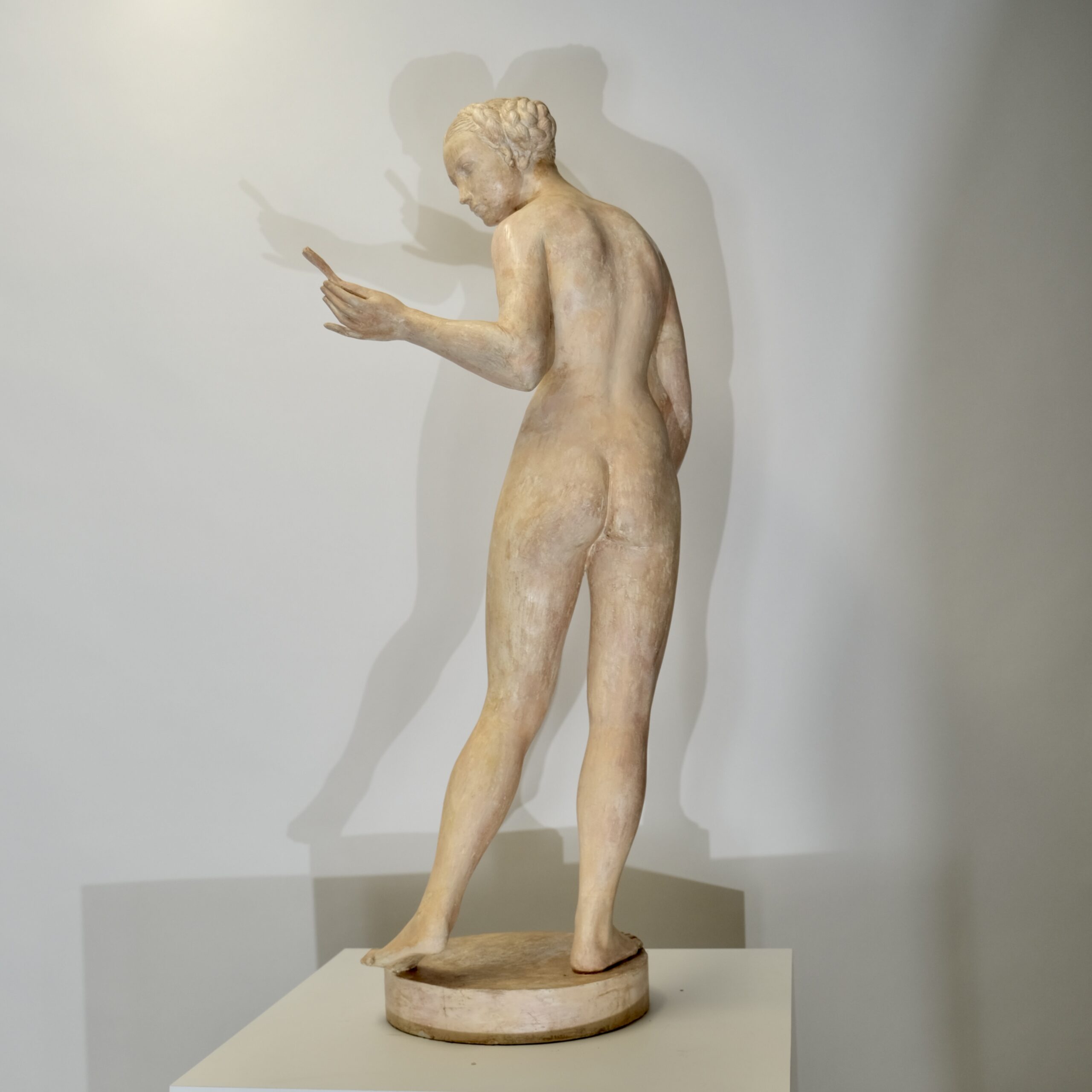
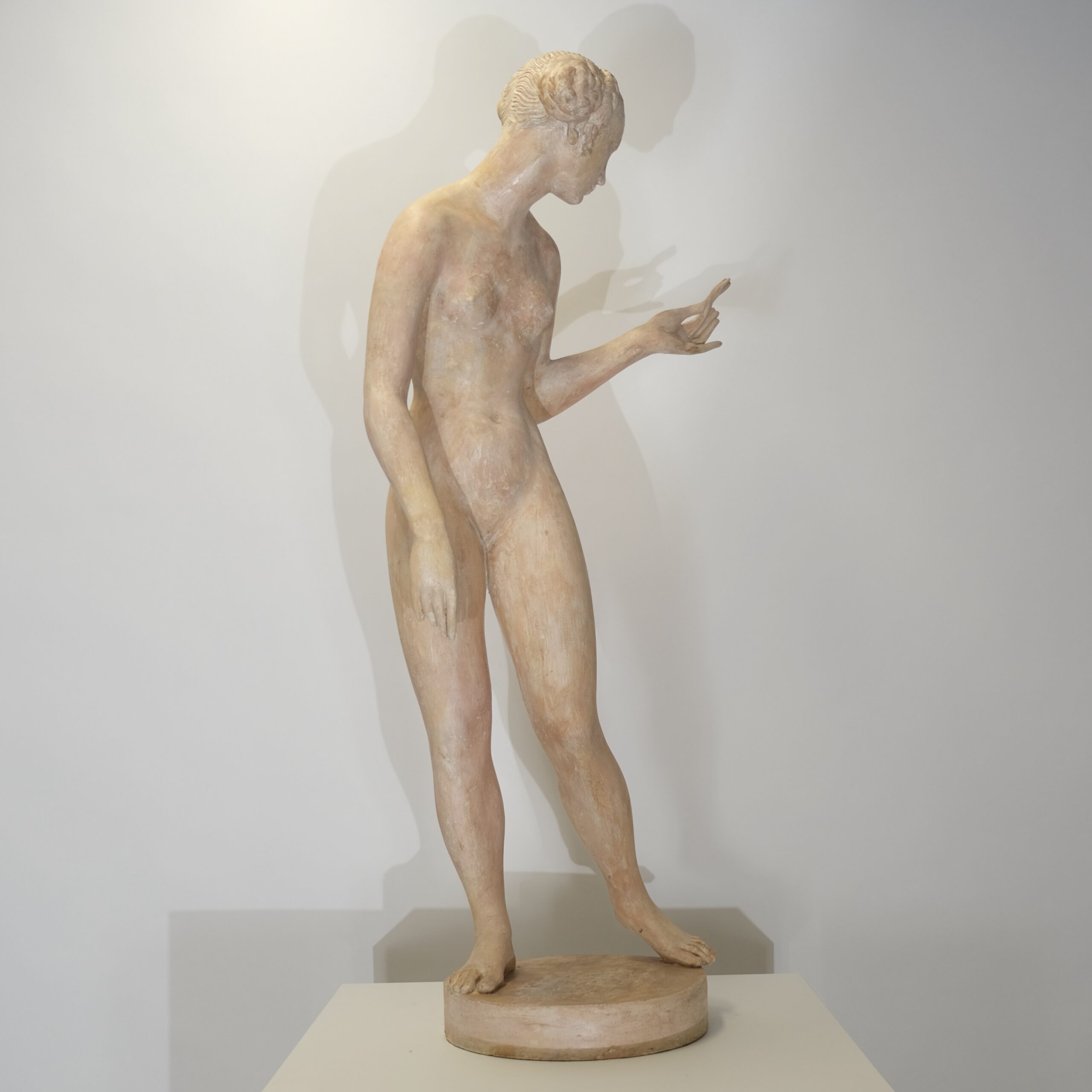
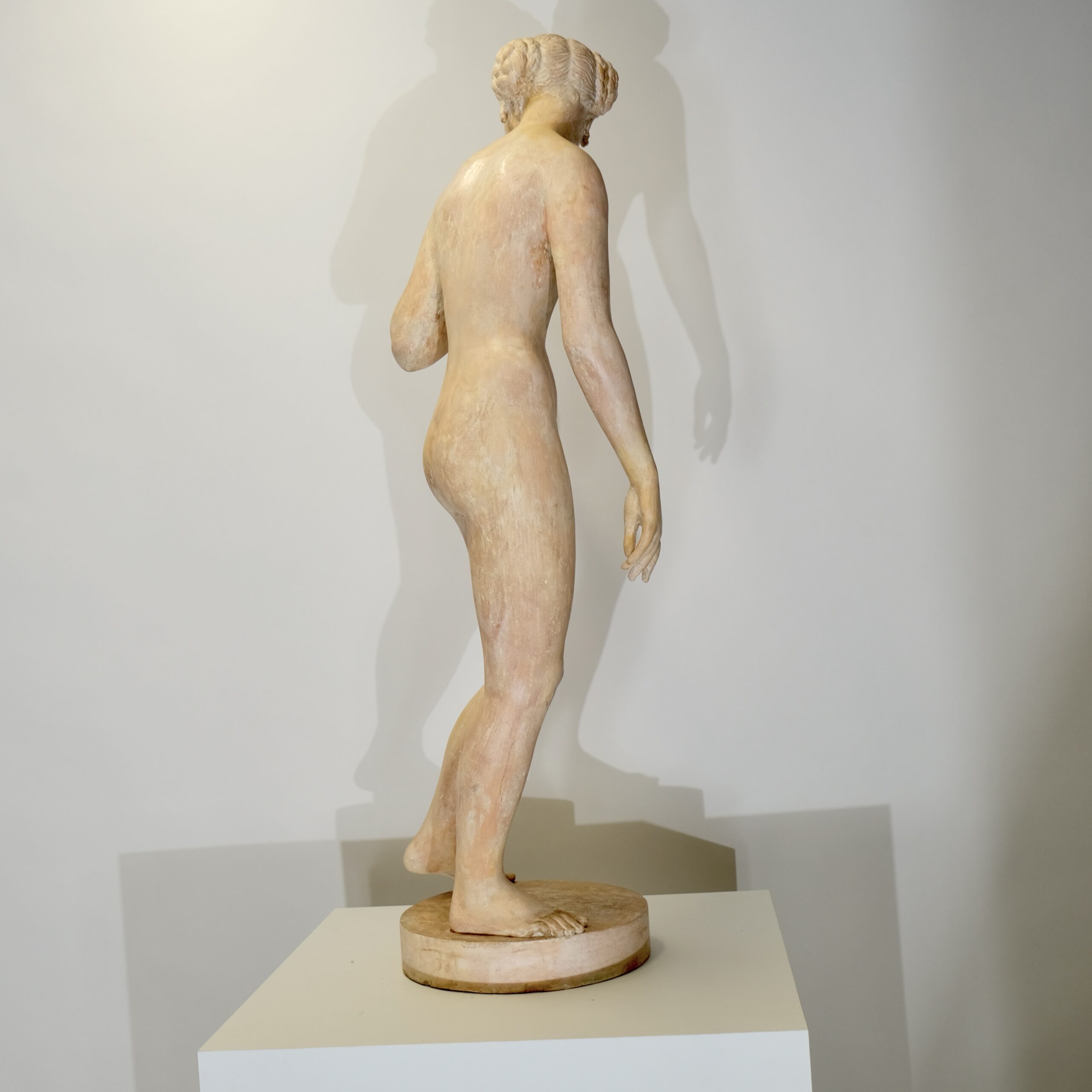
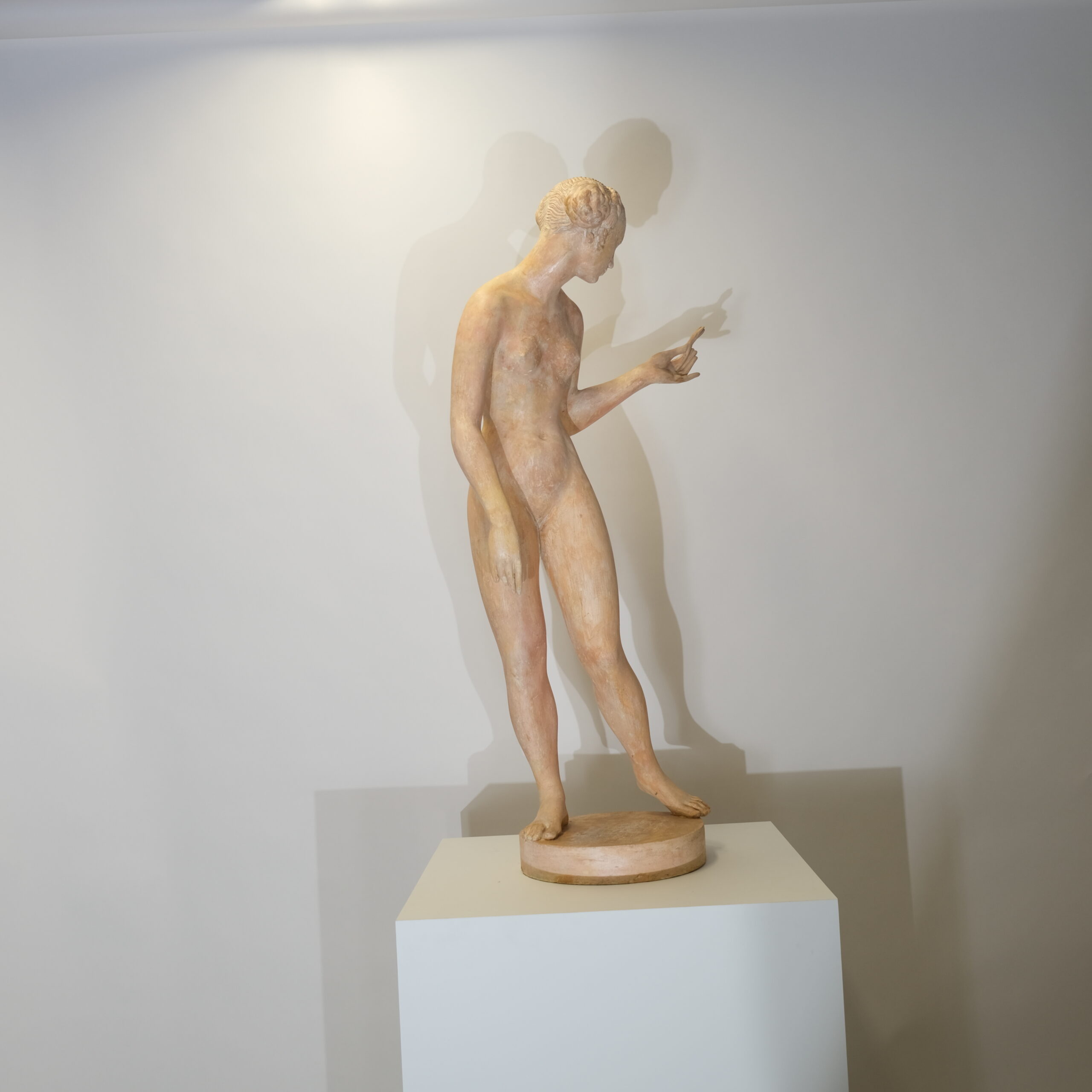
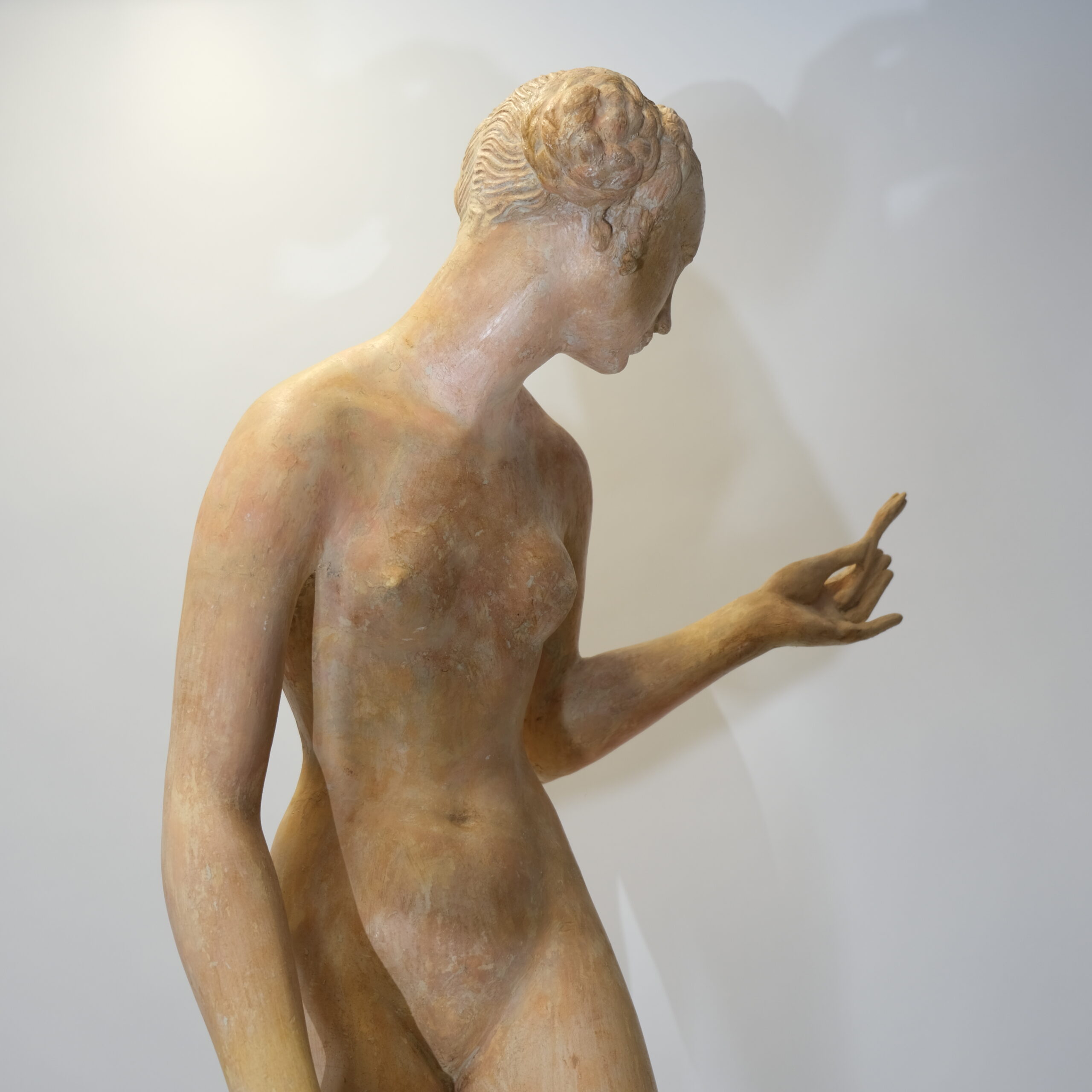
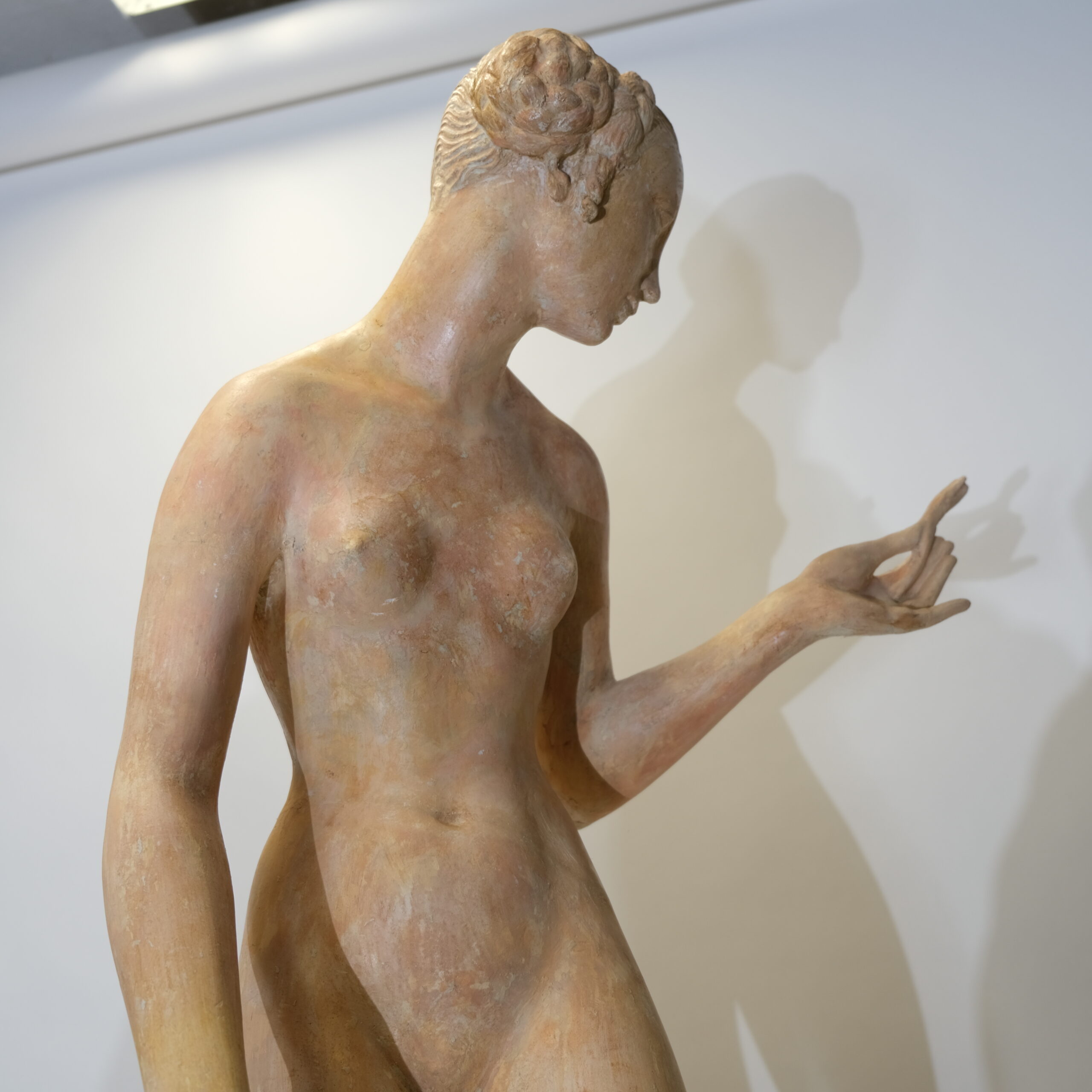
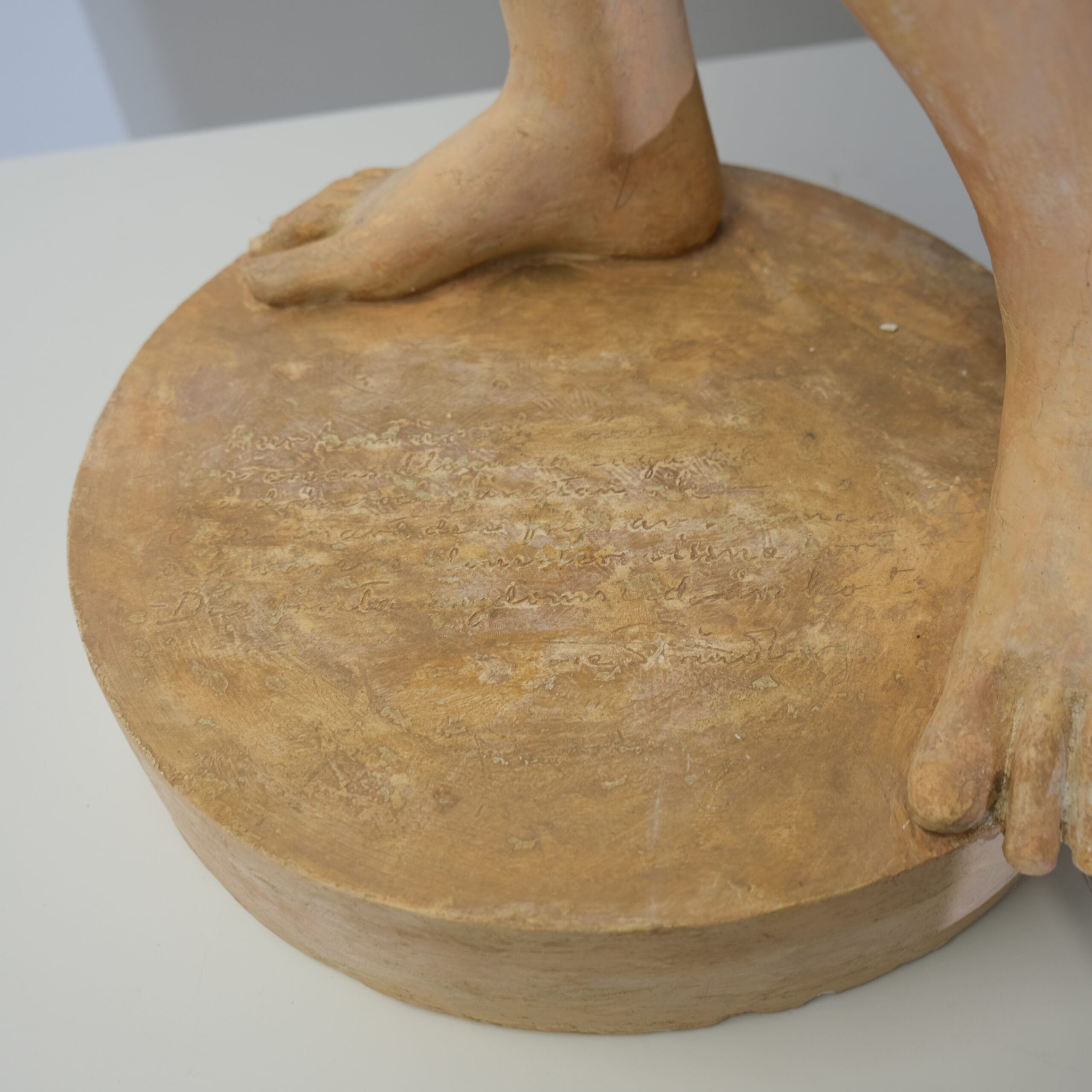
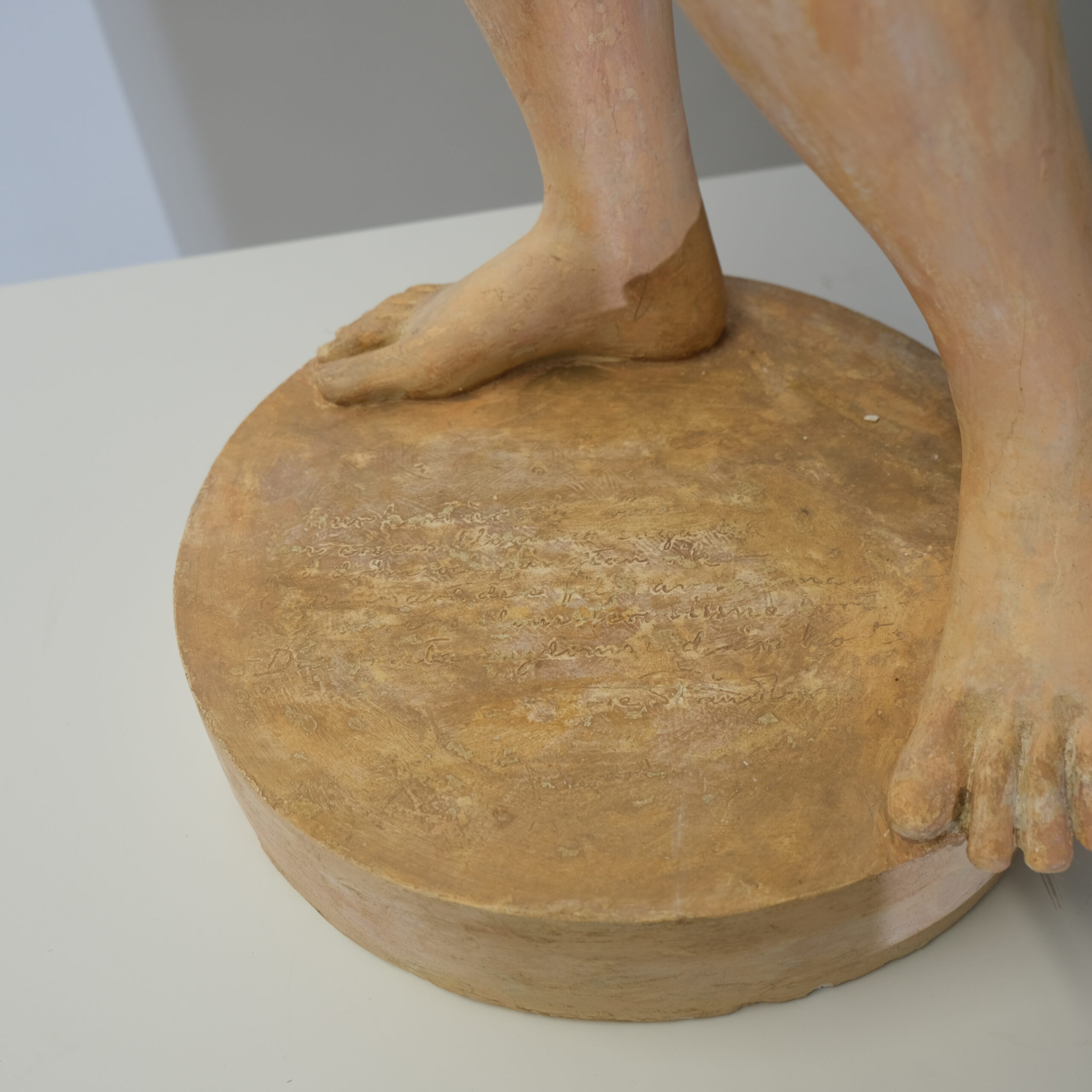
“Crocus” Plaster sculpture by Tore Strindberg (1882-1968)
Price:95000 SEK8455 EUR9120 USDChange Currency
Dimensions: Height 106 cm (42 inches) x Width 47 cm (19 inches) x Depth 30 cm (12 inches)
Tore Strindberg (1882-1968)
Crocus - first version
Signed Tore Strindberg
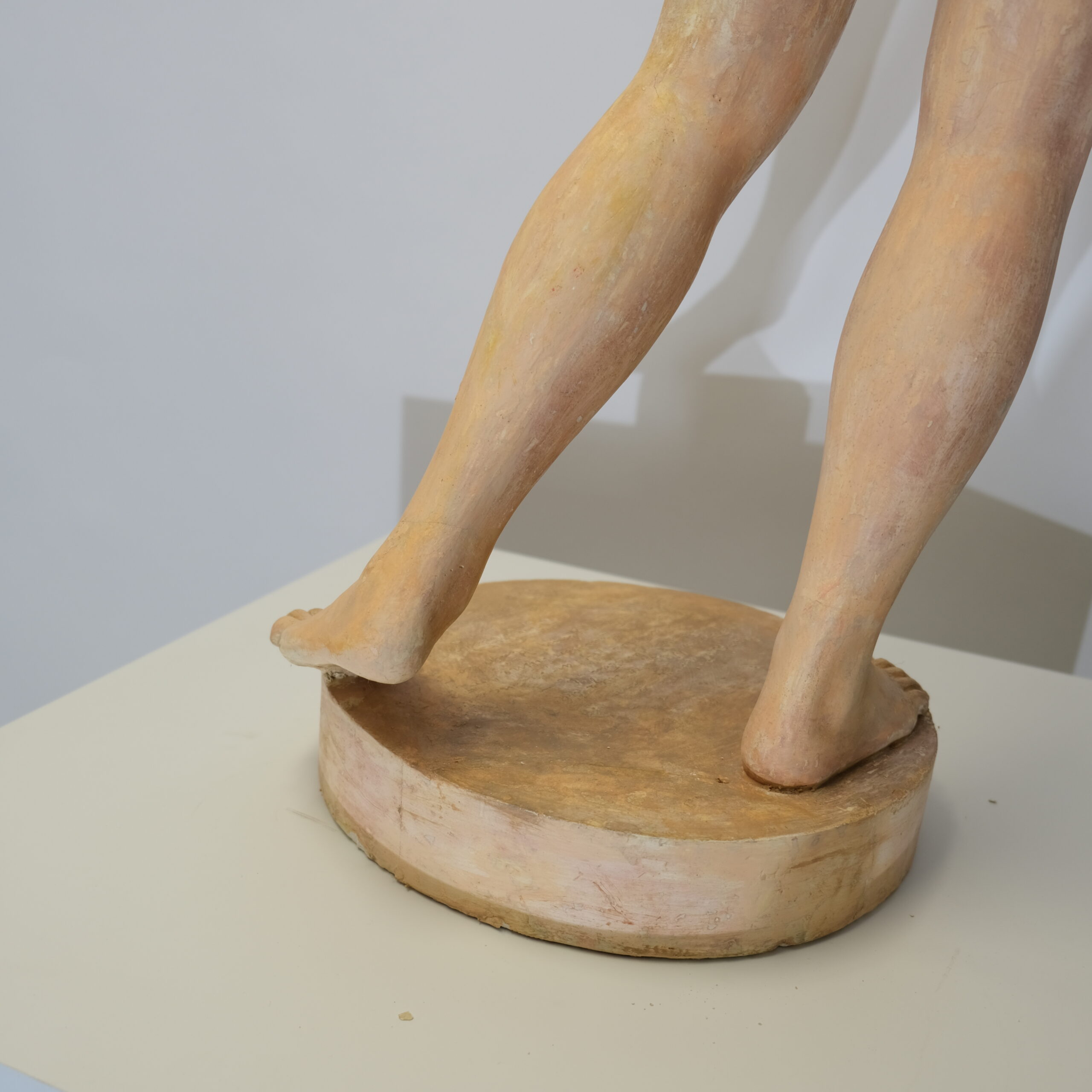
Terracotta-colored plaster. Original surface. Bottom plate with engraved text: "How short is the time of spring, a crocus-flower's tale like a dream and rich in longing. Alas, soon it is followed by the summer's end and the spring flowers wither away - Your first youth is short." "Tore Strindberg"
Made around 1918. This sculpture is probably an early example, made around 1918, perhaps the prototype or sample and is of the so-called first version, (see text further down). A very rare work by Strindberg in full size, the same size as the later bronze castings are made and which today can be found in some public places and art collections. There is a difference of a few centimeters and height as most do not have a bronze base and are mounted on other types of foundations such as marble. Thus, this sculpture is a few centimeters higher with its plaster base. There are some older restorations.
The first bronze sculpture of "Crocus" was inaugurated several years later in 1928 on a lawn near Vasaplatsen in Gothenburg and has remained in the same place ever since. The sculpture was originally commissioned by a Finnish businessman living in Stockholm to be placed in his garden. Tore Strindberg was then given permission to cast additional copies. Today, the various versions of the work can be found, among others, at Stadshusterrassen in Stockholm, Rosengården in Karlshamn and Caroli kyrkbacke in Borås. The sculpture in Gothenburg was donated to the city by the wholesaler Wilhelm Henriques. The model for "Crocus" was the young girl Sigrid Skjöldebrand (later Lundberg, 1901–1995), who was 17–18 years old at the time the sculpture was created. She was related to Strindberg and was asked to pose as a model through this connection.Tore Strindberg was born in Stockholm in 1882 and died there in 1968. He studied at the Royal Mint under Adolf Lindberg from 1898 to 1902 and at the Royal Academy of Fine Arts from 1902 to 1907. During his time at the academy, he participated in De Fries' exhibition in Stockholm in 1904 and in Axel Tallberg's etching school. After his studies, he spent a period in Paris before returning to Sweden, where he created an altarpiece for Hjorthagen's chapel and made stucco reliefs and wooden sculptures for Engelbrekt Church in Stockholm.
Strindberg is best known for his bronze sculptures in a classicist and realistic style from the 1920s and 1930s. Apart from "Crocus", his best-known public work is "The Five Continents", a monumental fountain on Järntorget in Gothenburg, which was unveiled in 1927.
Strindberg participated in several international exhibitions, including in Venice, Vienna, Reykjavik and Copenhagen, as well as in exhibitions arranged by the Swedish General Art Association. He was awarded a scholarship from the Winqvist Fund from the Royal Swedish Academy of Fine Arts in 1925 and a cultural scholarship from the City of Stockholm in 1960. His works are today represented at the National Museum, the Moderna Museet, the Thielska Galleriet in Stockholm, the Rottneros Sculpture Park, the Gothenburg Museum of Art and the Malmö Museum.